The Feminine Journey
Exploring the Feminine Within Us
The feminine cannot be reduced to a single image, role, personality, or way of being a woman.
It can be gentle and powerful, sensual and contemplative, nurturing and fiercely independent. It can seek connection while protecting its freedom, create life while reinventing itself, give deeply while learning to receive.
At different moments of life, different qualities may come forward, revealing aspects of ourselves that we may not have known were there.
The feminine journey is therefore not about becoming a particular kind of woman.
It is about discovering more of who you are.
What Are Goddess Archetypes?
The Goddess Archetypes are one way of exploring the many dimensions of feminine experience – through mythology, psychology, self-reflection and lived experience. They offer a symbolic language for approaching the different qualities, desires, patterns and inner forces that shape a woman’s experience of herself and her life.
Exploring the Goddesses Within Us
Across different cultures and mythological traditions, goddesses have carried stories of love, power, wisdom, independence, motherhood, beauty, transformation, creativity, devotion, desire, death and rebirth, and many other dimensions of feminine experience.
For centuries, these stories have given women symbolic images through which they could understand themselves, their relationships, their choices, and the different forces moving through their lives.
The Goddess Archetypes Project explores these figures not simply as characters from ancient mythology, but as a symbolic language for self-exploration.
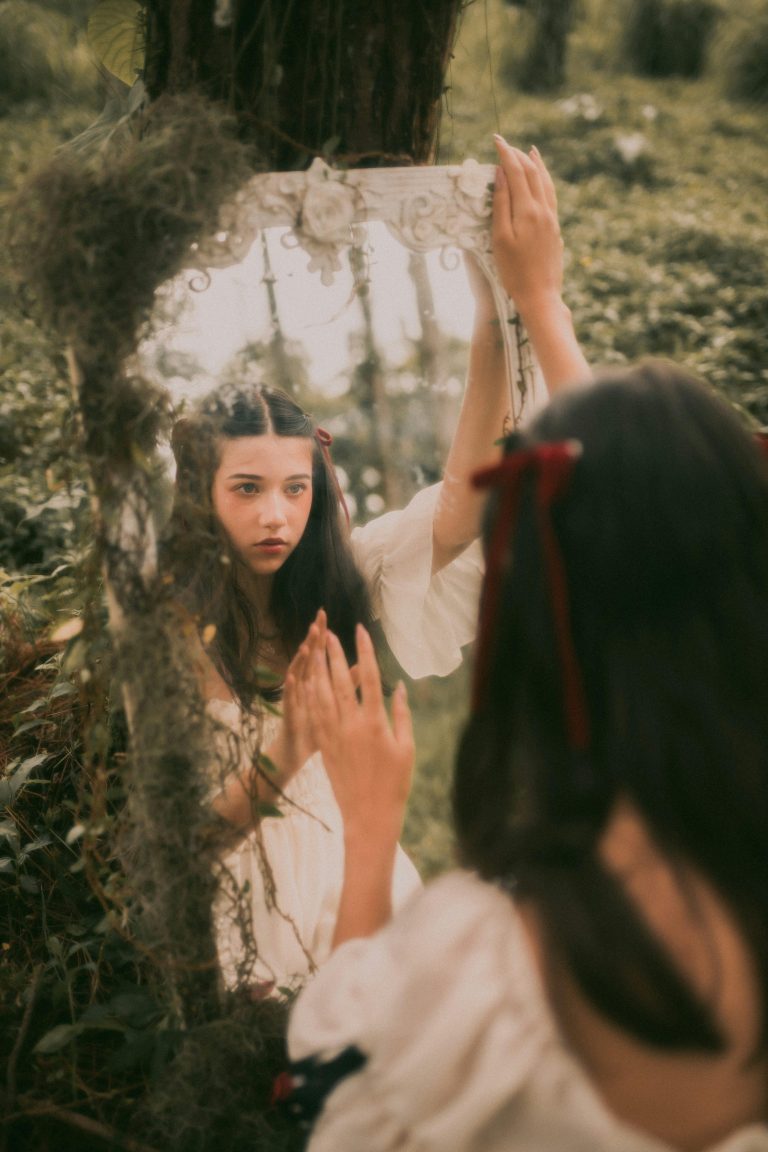
A goddess can become a mirror.
Not a label telling you who you are, but an image that helps you notice something in yourself.
A quality that is alive.
A desire you have forgotten.
A pattern you keep repeating.
A part of yourself that has been given little space.
Or a possibility you are only beginning to recognize.
The question is therefore NOT simply “Which Goddess are you?”
A deeper question is:
What qualities and patterns are active in me now – and what becomes possible when I consciously explore different aspects of myself?
Three Mythological Traditions
The Goddess Archetypes Project currently explores three major mythological traditions:
Greek Goddess Archetypes
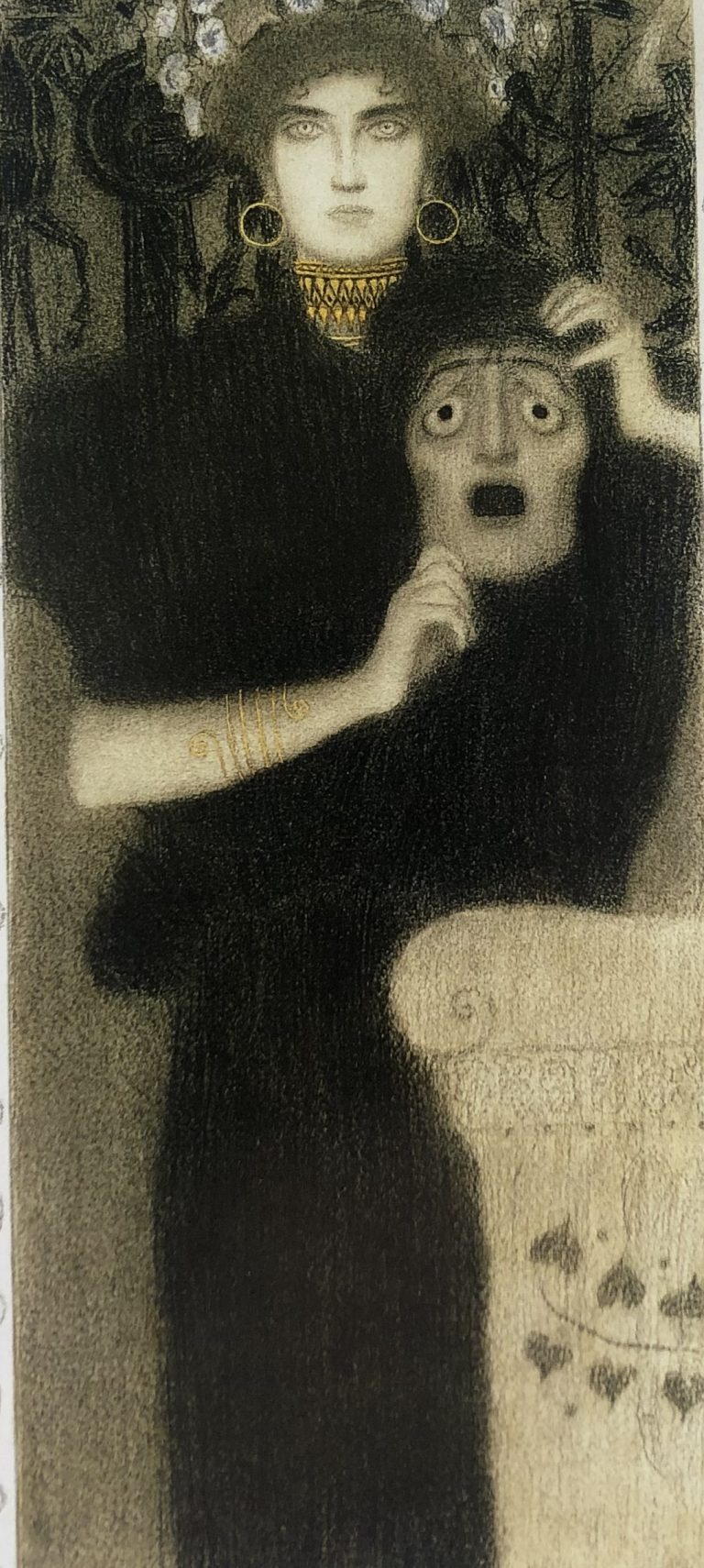
The Greek Goddess tradition forms the foundation of the archetypal work within this project.
Here, mythology meets psychological and archetypal exploration. The stories of the Goddesses become a way to look at different dimensions of feminine experience – from independence and wisdom to love, sexuality, creativity, commitment, motherhood, inner life, transformation, and relationship.
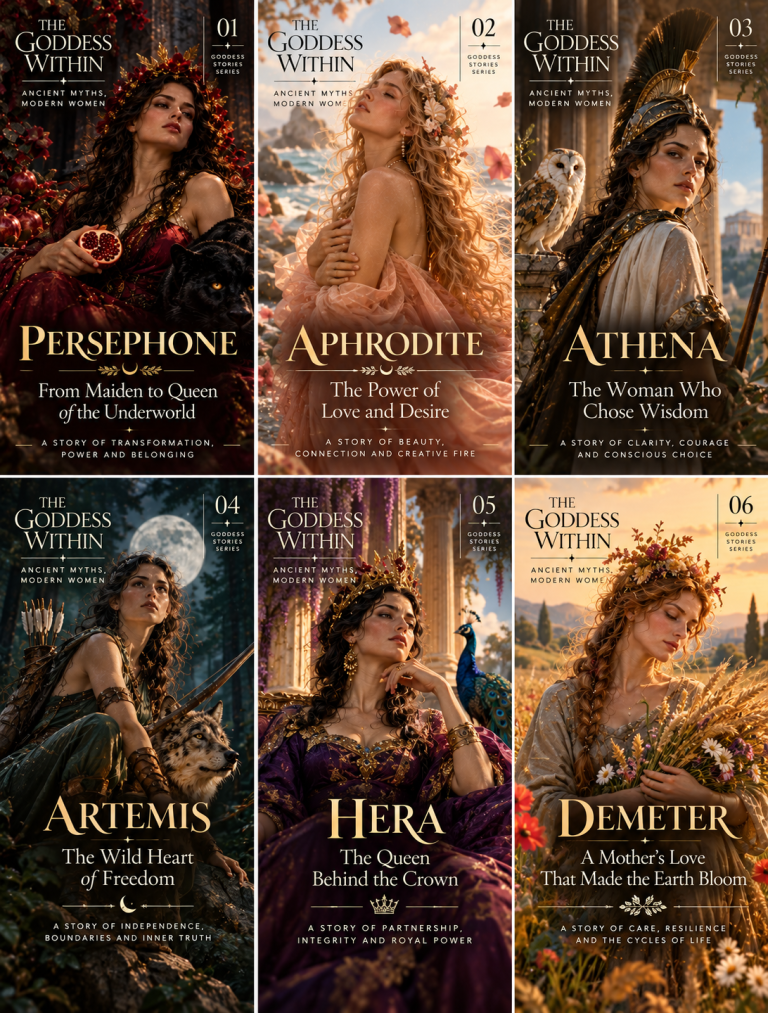
The foundational Greek Goddess framework includes six archetypes:
Athena · Artemis · Aphrodite · Hera · Persephone · Demeter
Each represents a different constellation of qualities, needs, desires, ways of relating, and ways of moving through life.
The work does not ask you to decide which one you are.
Instead, it invites you to notice which qualities are familiar, which may be less developed, which are active in a particular period of your life, and what may become possible when you consciously bring another aspect forward.
Explore the Greek Goddess Archetypes
Indian Goddess Traditions
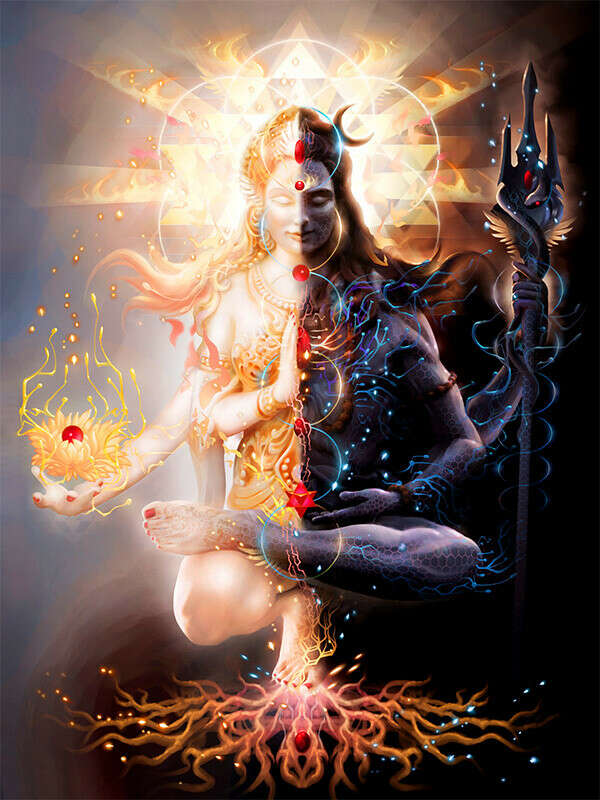
The Indian Goddess traditions open another dimension of the feminine – one deeply connected with sacred symbolism, mythology, divine qualities, devotion, power, transformation, creation, protection, wisdom, and the many expressions of Shakti.
These Goddesses belong to rich spiritual and mythological traditions with their own histories, symbols, stories, and cultural contexts.
The work here is not simply to translate them into a psychological system.
It is an invitation to encounter their mythology and symbolism on their own terms and to explore what these figures may reveal about feminine power, consciousness, devotion, transformation, and the sacred feminine.
Explore the Indian Goddesses
Egyptian Goddess Traditions
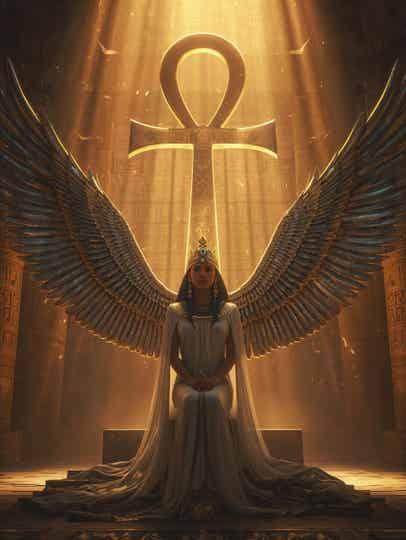
The Egyptian Goddess traditions offer another ancient language of the feminine.
Through their myths, symbols, temples, relationships, and stories of creation, protection, sovereignty, love, death, rebirth, and transformation, Egyptian Goddesses reveal different ways the feminine has been imagined and experienced within the ancient world.
Here too, mythology comes first.
The stories and symbols are not reduced to modern personality categories. Instead, they offer a doorway into another symbolic world – one that can be explored for its mythology, spirituality, cultural meaning, and relevance to contemporary inner inquiry.
Explore the Egyptian Goddesses
The Goddess as a Mirror
A woman can recognize herself in more than one Goddess.
Different qualities may become more or less active depending on relationships, circumstances, responsibilities, life stages, transitions, choices, desires, and personal development.
The same woman may recognize herself strongly in one archetypal pattern at one point in her life and discover something completely different in herself years later.
This is why the Goddess Archetypes are mirrors, not labels.
They are not personality tests.
They are not prescriptions for how a woman should behave.
And they are not meant to place women into fixed categories.
They offer another way of asking questions about ourselves.
What is alive in me?
What do I desire?
What have I learned to suppress?
What part of me wants more space?
Where am I powerful?
Where am I disconnected from myself?
What patterns keep appearing in my relationships?
What might I discover if I allowed another part of myself to become more conscious?
Mythology, Archetypes and the Inner World
The Goddess Archetypes Project brings together several layers of exploration.
Mythology
The original stories, symbols, relationships, attributes, and cultural traditions surrounding the Goddesses.
Archetypal Exploration
The symbolic qualities and patterns that these figures can illuminate in contemporary feminine experience.
Psychology
Most developed within the Greek Goddess framework, where mythology can be explored alongside psychological and archetypal perspectives.
Inner Exploration
The opportunity to use these symbolic figures as mirrors for reflection, self-observation, relationships, choices, creativity, desire, identity, and personal development.
The purpose is not to replace mythology with psychology – or psychology with mythology.
It is to allow different layers of meaning to speak to one another while keeping their distinctions clear.
Experience the Goddess Work Through Experience
Explore how the archetypes can become a lived experience through women’s retreats.
Where the Goddess Archetypes Can Take You
You may arrive here because one Goddess has always fascinated you.
You may recognize yourself in several of them.
You may feel almost nothing in one description and an immediate recognition in another.
Or perhaps you simply feel that there are parts of yourself you have never had language for.
You do not need to know the answer before you begin.
Sometimes the most interesting part of the journey is discovering the question.
Explore the Goddess Archetypes
Greek Goddesses
Indian Goddesses
Egyptian Goddesses
And if you want to take the exploration beyond reading – into experience, reflection, conversation, and embodied work – the Goddess Archetypes framework also lives within AMOREI retreats, seminars, workshops, and other experiences.
Discover the Goddess Within Women Retreat in Costa Rica
Explore the Goddesses
The project will gradually develop deeper knowledge and individual resources for the Goddesses within each tradition.
The Greek Goddesses Behind the Archetypes
Aphrodite, Athena, Artemis, Hera, Persephone and Demeter are more than mythological figures. Their stories, symbols and relationships have continued to inspire ways of thinking about feminine experience, psychology,
Goddess Archetypes and Archetypal Psychology
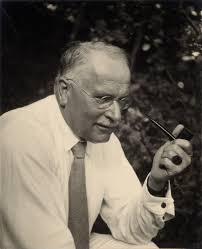
The Goddess Archetypes framework is rooted in the tradition of archetypal psychology, particularly in the work of Carl Gustav Jung, who described archetypes as deep patterns of the human psyche and developed the concept of the collective unconscious – a layer of the psyche that contains universal or recurring symbolic patterns that appear across cultures, myths, dreams, stories, and human experience.
From this perspective, the stories and images that humanity has carried across generations are not simply ancient narratives. They can also be understood as symbolic expressions of recurring patterns of human experience. We encounter these patterns in myths, relationships, desires, conflicts, choices, identities, and different stages of life. Archetypal work offers a way of entering into these stories consciously and recognizing what they may reflect within our own lives.
The Goddess Archetypes framework builds on this broader psychological tradition and takes it into a specifically feminine symbolic field. Jean Shinoda Bolen made an important contribution to this development through her exploration of the Greek goddesses as archetypal patterns in women’s lives, most notably in Goddesses in Everywoman. Her work brought together Jungian archetypal psychology, Greek mythology, and the lived psychological experience of women, providing a foundation for exploring the goddesses not simply as mythological figures, but as symbolic patterns that may become active in different women, relationships, circumstances, and stages of life.
The Goddess Archetypes Project draws from this body of knowledge while continuing to develop its own contemporary framework. Jung provides the broader psychological understanding of archetypes and the collective unconscious; Bolen provides an important bridge between archetypal psychology and the Greek goddesses as a language for women’s experience; and the AMOREI Goddess Archetypes work develops this knowledge further through its own synthesis of mythology, psychological reflection, experiential exploration, practices, facilitation, and lived experience.
This lineage is important because the six Goddesses are not being presented as arbitrary modern personality categories. They belong to a much deeper tradition of working with myth, symbol, psyche, and recurring human patterns. At the same time, the AMOREI framework does not treat the interpretations of Jung or Bolen as fixed conclusions. Their work forms part of the knowledge base from which the Goddess Archetypes Project continues to explore, question, develop, and create.
The purpose of this work is therefore not to tell a woman which Goddess she is, but to offer an ancient symbolic language through which she can recognize patterns within herself, explore different dimensions of her experience, and consciously discover what becomes possible when she encounters these archetypal energies in a new way.
Explore the Goddess Archetypes Through Experience
The Goddess Archetypes are not only a body of knowledge to read about. They are a living framework for exploration – one that can be experienced through reflection, embodiment, creativity, relationship, ritual, and direct personal inquiry.
At AMOREI, we develop and facilitate retreats that draw from this work, bringing the archetypal framework into an experiential setting where women can explore different dimensions of themselves beyond the page. Each retreat may work with the archetypes in its own way, selecting and adapting the elements that are most relevant to its particular theme and experience.
The Goddess Within is one expression of this work: a women’s retreat where the Goddess Archetypes become part of a broader journey of self-exploration, connection, embodiment, nature, creativity, and inner discovery.
The Goddess Archetypes knowledge base will continue to evolve, and so will the ways we bring this work into our retreats and future AMOREI experiences.
If you feel drawn to explore the archetypes not only through knowledge, but through experience, you are invited to discover our retreats.
Beyond Gender: Goddess Archetypes and the Human Psyche
The Goddess Archetypes are expressed through feminine mythological figures, and much of the work within AMOREI is intentionally centered on women’s experience. This focus is not accidental. There are dimensions of feminine life – desire, embodiment, relationships, motherhood, creativity, self-expression, choice, intimacy, beauty, and the changing experience of the self across different stages of life – that deserve to be explored in their own language and depth, rather than continually translated through frameworks created primarily around a masculine experience.
At the same time, the word Goddess should not be mistaken for a biological boundary.
An archetype is not a gender identity, and the qualities represented by a feminine mythological figure do not belong exclusively to women. The Goddess is the image; the psychological quality is human.
Aphrodite, for example, may help a woman understand her relationship with desire, sensuality, beauty, attraction, pleasure, creativity, and the experience of becoming deeply alive through love or through the creative process. But these capacities are not absent from the male psyche.
A man can be profoundly responsive to beauty, deeply moved by love, immersed in artistic or creative work, capable of sensual perception and emotional intimacy, or drawn toward an experience of life in which feeling, attraction, imagination, and creation become powerful sources of meaning. The symbolic language of Aphrodite can illuminate those dimensions of his inner life just as meaningfully.
The same principle extends beyond Aphrodite. Athena may illuminate strategic intelligence, discernment, focused thought, and purposeful action; Artemis may speak to autonomy, independence, instinct, and the freedom to pursue one’s own path; Hera may illuminate commitment, partnership, loyalty, and the meaning of union; Demeter may bring attention to nurturing, care, nourishment, and the impulse to protect what is precious; Persephone may open a language for receptivity, inner transformation, descent into deeper experience, and the changing relationship between the visible and invisible dimensions of life.
These are feminine mythological images, but the human capacities they help us contemplate are not owned by one sex.
This makes the AMOREI framework less about assigning identities and more about discovering wholeness.
A woman does not become less of a woman because she develops her Athena or Artemis qualities, just as a man does not become less of a man because he discovers something of Aphrodite, Demeter, Persephone, or Hera within himself.
The development of a psychological capacity does not require a person to abandon the identity through which they experience their life. On the contrary, it can make that identity more spacious, more conscious, and less dependent on the narrow roles that culture may have assigned to it.
What has traditionally been called feminine or masculine is often a mixture of psychological qualities, cultural expectations, and symbolic language.
Human beings are more complex than those categories suggest. We can be decisive and receptive, passionate and contemplative, independent and deeply relational, analytical and intuitive, ambitious and nurturing, sensual and disciplined.
These qualities do not need to cancel one another out. A mature psyche is capable of holding apparent opposites without requiring one side to disappear.
From this perspective, the Goddess Archetypes can be approached on two interconnected levels.
The first is the feminine experience – the territory in which AMOREI is currently exploring these archetypes most deeply, particularly through The Goddess Within Women Retreat and the growing body of work devoted to women’s lives.
The second is the human psyche – the wider symbolic territory in which the qualities represented by these figures can be encountered, developed, neglected, repressed, integrated, or transformed by human beings of any gender.
Keeping these two levels together gives the framework both a clear feminine focus and a broader psychological depth. It allows AMOREI to speak directly and meaningfully to women without suggesting that the inner qualities represented by the Goddesses are biologically restricted to women.
Ultimately, the more important question is not, “Which Goddess am I?” but something much more alive:
The Goddess offers an image through which that exploration can begin. What we discover through the image belongs to the larger territory of being human.