The Hidden Link Between Environmental Destruction, Emotional Abuse and Human Consciousness
After spending the last two years in deep personal retreat and isolation, living close to nature and immersed in a profound process of inner transformation, I returned to society carrying a different perception of reality than the one with which I had entered that journey.
During those years, far away from the speed, distractions, and constant stimulation of modern life, something inside me also slowed down. As my mind became quieter, I started noticing things that previously seemed insignificant.
I became aware of the rhythm of nature, the intelligence present within living systems, and the countless invisible connections that sustain life every single day without asking for recognition.
It revealed itself in the way I looked at a glass of water, a piece of bread, a tree, a relationship, a conversation, and even the smallest daily interactions that most people pass by without noticing.
For much of my earlier life, I consumed these resources without much awareness.
Like many people living in modern society, I rarely thought about the journey that brought food to my plate or water into my home. I wasted food, purchased things I did not truly need, and often took for granted the abundance surrounding me.
Life eventually became my teacher.
Not through philosophy alone, but through direct experience.
Through periods of limitation, uncertainty, and transformation, I began to understand something that cannot be learned intellectually. Appreciation is not created by information. Appreciation is created by connection.
The more deeply connected I became to nature, the more impossible it became to waste what nature had provided.
Not because of fear or someone told me it was wrong and not because of environmental ideology.
When we truly feel connected to something, we stop treating it carelessly and at the same time gratitude becomes a way of life and naturally changes behavior by changing a way of perceiving reality.
When we start feeling our connection to everything, things that we considered ordinary will change.
Food, water, water, air and earth itself will become sacred.
For me, as for many others seekers, I could not only intellectually understand the environmental challenges facing our planet but actually feel them.
I could feel the pain hidden beneath humanity’s endless consumption.
I could feel the imbalance created by our obsession with taking while rarely pausing to appreciate, replenish, or give back.
And perhaps most importantly, I began to notice something that I had never fully understood before: the way we relate to nature mirrors the way we relate to each other.
The longer I observed people, families, and relationships, the more I began noticing a pattern that appeared again and again.
The way a person relates to life itself – to nature, most of the time becomes visible in the way they relate to everything around them.
A person who constantly consumes without gratitude often approaches relationships in a similar way.
A person who feels entitled to receive but rarely pauses to appreciate can unconsciously bring the same attitude into marriage, friendship, parenting, and family life.
When appreciation disappears, entitlement begins to grow.
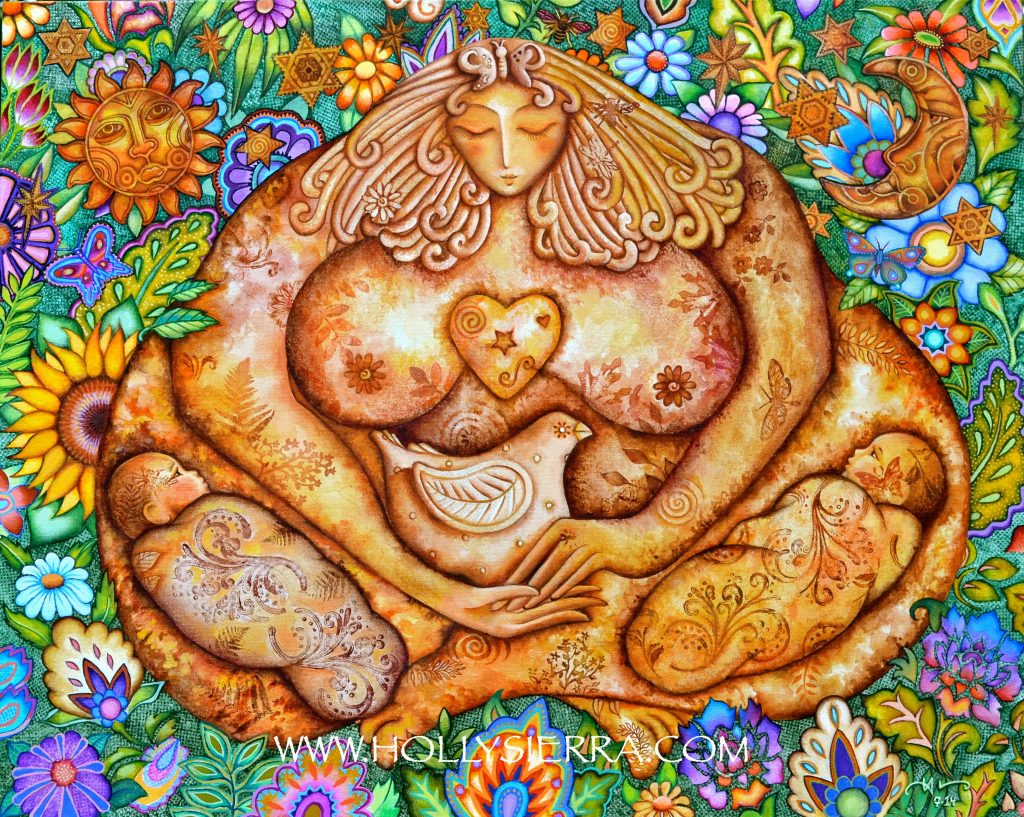
And at the center of all of it lies something that ancient traditions understood deeply but modern society has largely forgotten – nature carries feminine principles of life and the way we relate to it, mirrors the way we the society relate to women.
Which creates the way people create relationships in a family as well as in the world.
The Crisis Is Not Only Environmental. The Crisis Is Relational.
Most people assume that environmental destruction is primarily an ecological issue.
Others see relationship breakdowns as psychological issues.
Still others view rising anxiety, depression, loneliness, family dysfunction, and emotional disconnection as separate social problems.
But what if they are not separate at all?
What if they are different expressions of the same underlying fracture?
What if the ecological crisis, the crisis of relationships, the crisis of family, and the crisis of emotional well-being all emerge from the same source: humanity’s disconnection from nature as a disconnection from life itself?
Because when a human being loses the capacity to feel connected to life, everything gradually becomes an object.
Nature becomes a resource.
Food becomes simply a product.
Water becomes a commodity.
The body is treated as a machine.
Relationships become transactions and contracts.
People become functions.
And eventually love itself becomes conditional.
This is not merely a social problem. It is a crisis of consciousness.
The Forgotten Feminine Within
Across countless spiritual traditions, nature has been associated with the feminine principle, not because nature is literally female, but because it embodies qualities that have always been connected to the feminine dimension of existence: creation, nurturing, receptivity, intuition, sensitivity, interconnectedness, and the ability to sustain life.
This feminine principle exists within every human being regardless of gender.
- It is the part of us capable of feeling.
- The part capable of empathy.
- The part capable of listening.
- The part capable of recognizing the sacredness of life.
When this inner feminine dimension becomes suppressed, denied, or disconnected, people often become highly functional while simultaneously becoming emotionally unavailable.
They may achieve success.
They may accumulate wealth.
They may build impressive careers.
Yet they often struggle to experience intimacy, vulnerability, gratitude, and authentic love.
They become disconnected not only from nature but from their own hearts.
When a person loses connection with their own emotional and feminine dimension, that loss inevitably affects every area of life.
- It affects marriages.
- It affects families.
- It affects communities.
- It affects entire societies.
How Disconnection from the Femininity Can Become Abuse
One of the most painful realizations of my own healing journey was recognizing how deeply emotional disconnection in one person can shape an entire life of others, who depend on them.
This is not about blame.
In many spiritual traditions, difficult family experiences are often viewed as part of the soul’s journey and growth.
However, understanding does not mean ignoring.
Compassion does not mean pretending harm does not exist.
If humanity is to heal, we must be willing to understand these patterns honestly so that we can stop unconsciously repeating them and be able to change the matrix of the new life we are entering now.
Abuse often begins long before physical violence appears.
Abuse begins when another human being is no longer experienced and treated as fully human.
And that inability to fully see another person often develops when someone has become disconnected from their own emotional reality (which is life itself).
For many years, I was healing wounds created through my relationship with my father.
Not necessarily through dramatic events that people immediately recognize as abuse (even though this also existed, but considered a normal practice of educating kids at that time), but through something that can sometimes be equally damaging – emotional absence, emotional disconnection, and the inability to feel truly seen, valued, understood, or protected by the person who was supposed to provide those experiences.
Today, psychology increasingly recognizes that for a normal and happy existence, children do not simply need food, shelter, and education.
- They need emotional presence.
- They need to feel that their existence matters.
- They need to feel that their emotions are welcome.
- They need to feel that love is available without conditions.
They need to experience love that is not constantly tied to performance, achievement, obedience, or expectations.
When a father becomes disconnected from his own emotional world, he often loses access to his capacity to truly see the emotional reality of his children and others.
And the consequences of that disconnection can follow those children for decades.
Even for me, despite being a strong, independent, and resilient woman, those emotional wounds influenced many areas of my life.
Emotional wounds created during childhood do not simply affect romantic relationships.
They often affect self-worth, confidence, personal power, the ability to trust, the ability to receive love, and even a person’s relationship with success, abundance, and happiness
Daughters who grow up without emotional safety frequently enter adulthood carrying unconscious beliefs that love must be earned, that their needs are unimportant, or that emotional neglect is normal, that they are not worthy of love and good life events.
These beliefs often remain hidden beneath the surface of consciousness and quietly influence life choices for years. As a result, many women find themselves repeatedly entering relationships that recreate emotional dynamics they first experienced with their fathers.
This is one of the reasons emotionally abusive and physically abusive relationships remain so widespread throughout the world.
At the root of many of these patterns lies a profound disconnection from human feeling itself, which is inseparable from a disconnection from life and nature.
A man who has been taught to suppress vulnerability, sensitivity, empathy, grief, tenderness, and emotional awareness may appear strong externally while remaining profoundly disconnected internally.
And when a person becomes disconnected from their own inner world, they often lose the ability to fully connect with the inner world of another human being.
These patterns of disconnection often create a painful cycle that repeats itself from one generation to the next. When a child grows up without experiencing unconditional love, emotional presence, empathy, appreciation, and genuine connection, they often begin to see those experiences as normal, even when something important is missing.
Later in life, without realizing it, they may recreate similar relationship patterns with their partners, children, friends, and even in the relationship they have with themselves.
In this way, emotional disconnection continues to pass through families and communities, becoming part of the collective culture.
What begins as a wound in one person’s heart eventually affects future generations, shaping how people love, how they parent, how they treat one another, and even how they relate to nature and to life itself.
Healing begins when we acknowledge the wound and choose not to pass it forward. In order to achieve it, we must accept the truth and stop hiding behind endless excuses.
Yes, childhood wounds are real.
Yes, family conditioning is powerful.
Yes, people carry trauma.
But every adult also has the ability to become conscious of their thoughts, emotions, behaviors, and patterns.
Every adult has the capacity to heal.
Every adult has the responsibility to stop passing their wounds on to others.
If we continue saying that everything is simply karma, destiny, or someone else’s fault, while changing nothing, then we will continue creating a world that lacks empathy, accountability, and love.
We, as humanity, need to choose to stop passing it forward.
We need to understand how humanity’s disconnection from nature created society the way it is now where people experience fear, pain, disconnection and many other problems leading to wars and becoming a collective crisis.
The same consciousness that cannot appreciate a river often struggles to appreciate a wife or daughter.
The same consciousness that treats nature as a resource often treats other people as resources.
The same consciousness that consumes without gratitude frequently loves without gratitude and appreciation.
This does not mean that every environmentally unconscious person becomes abusive.
Nor does it mean that all abuse comes from environmental disconnection.
But both arise from the same deeper condition: separation from their own inner essence of the individual soul, that is both masculine and feminine in nature and understanding of interconnection of everything with everything.
Why Spiritual Awakening Always Leads Back to Nature
One of the most fascinating observations I have made during my work with others, is that people who undergo genuine spiritual transformation almost always find themselves returning to nature.
Not because nature is fashionable.
Not because it is trendy.
But because nature reminds us of something that modern life constantly encourages us to forget.
Everything is connected.
The forest does not exist separately from the soil.
The river does not exist separately from the rain.
The flower does not exist separately from the sun.
And human beings do not exist separately from the web of life that sustains them.
When people begin reconnecting with nature, they often begin reconnecting with forgotten parts of themselves.
They become more sensitive, more grateful, more compassionate, more emotionally present.
And as this happens, relationships naturally begin to change, because they are recovering their capacity to feel their true essence, connecting through nature with their feminine part, suppressed during thousand years of our western world history.
Here is your rewritten final section with longer, more flowing sentences, deeper AMOREI tone, and stronger emphasis on nature as a key part of healing humanity:
Healing the Feminine Is Healing Our World
This is why I believe that the healing of the feminine principle is one of the most important collective turning points humanity is facing today, not in a narrow sense that reduces it to gender or social roles, but in a much deeper sense that speaks about restoring the missing dimension of life itself that allows us to feel, to listen, to care, and to remain in living relationship with everything that exists.
It is not about women needing to dominate men, and it is not about society entering another cycle of ideological struggle where one force replaces another, because every time humanity tries to solve imbalance through domination, it only recreates the same wound in a different form, even if the language and symbols appear different on the surface.
The world does not need more domination, and it does not need more control disguised as progress or order; what the world urgently needs is a return to balance, a return to inner and outer coherence, and a return to the capacity to stay in relationship with life rather than trying to manage or suppress it.
The healing of the feminine principle, in its deepest meaning, is the restoration of our capacity for empathy that allows us to truly feel another human being, the restoration of gratitude that reconnects us with the simple miracle of existence, the restoration of listening that allows life to speak through other people, through nature, and through our own inner world, and perhaps most importantly, the restoration of our relationship with nature itself, which is not something external to us but the living ground from which we have never actually been separated.
Because when these qualities begin to disappear from human consciousness, relationships gradually transform into systems of control instead of living connection, families become environments of emotional survival rather than spaces of nourishment, children grow up carrying invisible wounds that they often cannot name, women hold unspoken emotional scars in their bodies and hearts, men remain trapped behind internal walls that they were taught to call strength, and entire societies slowly lose contact with the very source of life that sustains them.
And when we look more deeply, it becomes difficult to ignore the possibility that what we call the environmental crisis, the relationship crisis, the mental health crisis, and the crisis of meaning are not actually separate phenomena competing for attention, but rather different expressions of the same forgotten truth, each one reflecting a different angle of the same disconnection from life.
Because at its core, life was never meant to be dominated, controlled, or reduced to a system of extraction and management; life was always meant to be in relationship with itself, to be felt, respected, participated in, and honored as a living process that includes both nature and human consciousness as one continuous field.
And perhaps the next stage of human evolution will not come primarily through technological acceleration, political systems, or intellectual frameworks, but through something far more ancient and at the same time far more essential, which is a return to relationship as the foundation of existence, a return to gratitude as a natural state of consciousness, a return to nature not as something outside of us but as something we are inseparably part of, and a return to the feminine wisdom that teaches us how to feel life again and how to love it without needing to control it.
Because ultimately, the way we treat the Earth is never separate from the way we treat each other, and the way we treat each other is never separate from the way we are in relationship with life itself, and when that understanding becomes lived experience rather than intellectual idea, something fundamental begins to shift in human consciousness, allowing healing not as an abstract concept, but as a lived return to wholeness.