Death Anxiety as an Archetypal Structure of the Psyche
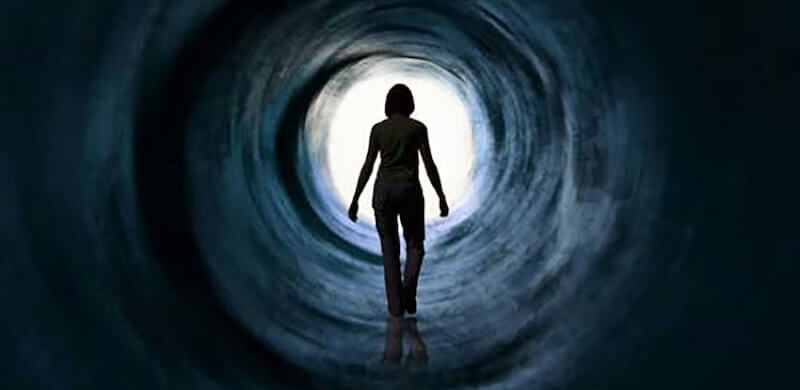
Death Anxiety as an Archetypal Structure of the Psyche
From the perspective of transpersonal psychology and the analytical tradition of Carl Gustav Jung, the fear of death is not merely a biological reaction of the organism.
It represents an archetypal structure embedded within the human psyche as part of a deeper process of individuation.
Jung viewed death not as an end, but as a symbol of transformation, associated with the dissolution of the ego and the emergence of a more integrated form of consciousness.
In this context, the fear of death is not fear of physical termination, but resistance of the psyche to the process of inner transformation.
If we consider human consciousness not as a fixed entity, but as a dynamic field, it becomes evident that different traditions describe its layers with remarkable precision – despite using entirely different languages.
Within psychedelic states, deep meditation, or spontaneous crises of consciousness, a person encounters the same fundamental point:
the temporary dissolution of the familiar sense of self and movement beyond what was previously perceived as identity.
It is precisely here that the primary fear arises – the fear of disappearance.
Jung: The Self and Ego Dissolution as a Path to Wholeness
In Jungian analytical psychology, the structure of the psyche is not limited to the ego – the “I”, with which a person identifies.
Rather, it includes:
- the ego as the center of conscious identity
- and the Self as a broader organizing principle of the entire psyche
The ego is only a small part of a much larger psychic field.
The Self represents wholeness, integrating both conscious and unconscious dimensions.
When, in deep states of consciousness, the ego structure weakens – as often occurs under the influence of ayahuasca, other psychedelics, or introspective practices – a person may encounter what Jung described as an approach to the Self.
This is experienced as:
- dissolution of personality
- loss of control
- a sense of disappearance
The Self is not a “higher self” in a religious sense, nor a personality.
It is a principle of totality encompassing both personal and collective aspects of the psyche.
From this perspective, the experience of “ego death” is not destruction, but a temporary suspension of limiting structures through which consciousness عادة perceives itself.
From the standpoint of the psyche – it is a structural crisis.
From the standpoint of the Self – it is expansion and movement toward wholeness.
This is why the fear of death often becomes central in such states:
the ego interprets the loss of its form as the disappearance of existence itself.
Castaneda: Tonal and Nagual as Two Modes of Reality
In a parallel tradition described by Carlos Castaneda, a different terminology is used, yet the experiential structure is strikingly similar.
- Tonal – the ordered world of everyday perception
(identity, language, biography, logic, social roles) - Nagual – that which lies beyond this order
(an unstructured field of experience that cannot be fully described)
If interpreted metaphorically:
- Tonal ≈ ego structure
- Nagual ≈ field of consciousness beyond form
The transition between these states is often experienced as disintegration of the familiar self – what, in psychedelic experience, feels like death, dissolution, or disappearance.
Yet, at a deeper level, this is not annihilation, but a transition from one mode of perception to another.
Neuroscience of Psychedelics: DMN and the Collapse of Self-Referencing
Modern neuroscience offers another layer of explanation.
A key role is played by the Default Mode Network (DMN) – a brain network responsible for:
- self-referential thinking
- continuity of identity
- internal narrative
Under the influence of psilocybin and ayahuasca, studies show:
- decreased DMN activity
- reduced connectivity between brain regions
- increased global neural entropy
- disruption of stable self-models
Subjectively, this corresponds to:
- ego dissolution
- loss of personal boundaries
- experience of “non-self” or expanded awareness
At this point, the psyche interprets the experience as a threat of disappearance.
Buddhism: Anatta and the Absence of a Fixed Self
Buddhist philosophy introduces another fundamental insight: anattā, or “non-self.”
According to early Buddhism, what we call the “self” is not a stable entity.
It is a process.
- the body changes
- sensations change
- thoughts change
- perceptions change
- consciousness changes
None of these elements constitutes a permanent center.
The “self” is a temporary aggregation of five skandhas, constantly in flux.
From this perspective, the fear of death arises not from a real threat to a stable self, but from misidentification with something that was never fixed to begin with.
In Vipassana meditation, this becomes direct experience:
observing impermanence dissolves the illusion of a stable observer.
At this point, the fear of disappearance begins to lose its foundation.
Death Anxiety as a Misidentification
If we integrate these perspectives – Jungian, Buddhist, shamanic-metaphorical, and neuroscientific – we can see a shared structure.
The fear of death is not only a biological survival mechanism.
It is tied to the stability of the ego structure that maintains the sense of a continuous “self.”
Across all systems, the same pattern emerges:
Fear of death arises where a temporary structure of consciousness is perceived as a permanent entity.
When this structure begins to weaken – through psychedelics, meditation, deep therapy, or extreme experiences – a sense of disintegration arises.
- Jung would describe this as an approach to the Self
- Castaneda as a shift from tonal to nagual
- Neuroscience as deactivation of the DMN
Yet subjectively, it feels the same:
loss of the familiar self, interpreted as death.
Psychedelic Experience as a Transition Mechanism
Ayahuasca and other psychedelic practices do not create a new reality.
They temporarily remove the filter through which consciousness maintains the sense of being a separate self.
In this sense, ayahuasca is not merely a substance, but a process that alters the architecture of perception.
It:
- weakens rigid cognitive models
- amplifies unconscious material
- disrupts habitual self-referencing
- opens access to a wider field of experience
Within this space, a person encounters a fundamental boundary:
the point at which their familiar identity ends.
Why This Is Linked to Fear of Death
Because the ego interprets its own dissolution as literal death.
However, within broader models of consciousness – described by Jung, mystical traditions, and partially by neuroscience – this dissolution is not an end, but a transition between levels of organization.
Final Integration
Ayahuasca as an Encounter with Death: A Scientific and Spiritual Understanding of the Primary Fear
If we combine all perspectives, a unified field emerges:
- Jung – psychological structure (ego and Self)
- Castaneda – perceptual model (tonal and nagual)
- Neuroscience – biological mechanism (DMN and self-referencing)
In all cases, psychedelic experience – including ayahuasca – touches the same central point:
the temporary dissolution of the fixed self and confrontation with what lies beyond it.
And it is precisely here that transformation of the fear of death occurs – not through belief, but through direct experience that consciousness is not identical to the form it temporarily inhabits.