The Persephone Archetype: From Maiden to Queen – A Journey Through Shadow and Transformation to Inner Power
Goddesses and Archetypes: Two Dimensions of Understanding
Before exploring the psychological archetype of Persephone, I would like to explain how I personally perceive goddesses and why I turn to their images when exploring human nature.
For me, goddesses are more than characters from ancient myths created to explain natural phenomena. They are also more than symbolic figures used by modern psychology to describe different aspects of personality.
In my worldview, goddesses are living, conscious beings who may exist in other dimensions or on levels of reality beyond our ordinary perception. I believe it is possible that they possess a far greater scope of consciousness and energetic capacity than human beings.
I do not present this understanding as a scientifically established fact, nor do I expect readers to share my beliefs. It is part of my personal spiritual understanding of reality, shaped through many years of studying different traditions, engaging in spiritual practices, and exploring my own experiences.
At the same time, I recognize that the qualities humanity has associated with different deities for thousands of years are also reflected in our own nature.
This creates an opportunity to bring spiritual and psychological perspectives together.
Archetypes help us explore how certain qualities, inner states, and ways of interacting with the world manifest in everyday life.
Yet for me, an archetype is not a complete definition of a goddess. It is one way of understanding certain aspects of her expression.
When I speak of Aphrodite, Athena, Artemis, Hera, Demeter, or Persephone, I do not mean that every woman belongs to one particular goddess.
I see their qualities as different possibilities that exist within human nature.
Several archetypes may be active within the same woman. Some qualities are strongly developed, others remain almost unnoticed, and still others awaken under particular circumstances.
Their relationship to one another may change throughout life.
This is why studying goddesses, for me, is not an attempt to divide women into psychological categories. It is an opportunity to understand the diversity of our inner nature, recognize internal contradictions, discover hidden abilities, and consciously participate in our own evolution.
The archetype of Persephone is particularly fascinating in this regard.
Persephone: The Archetype of Receptivity and Inner Transformation
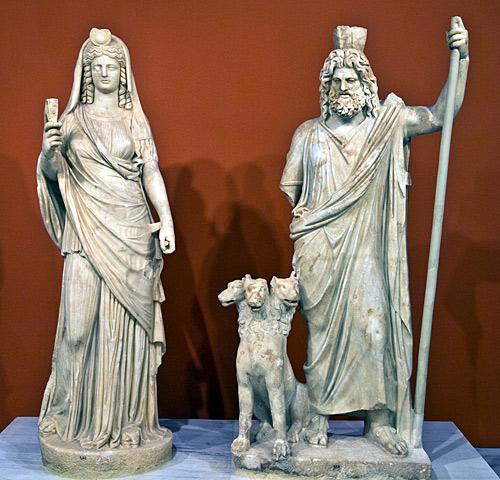
In Greek mythology, Persephone appears in two principal forms: the young Kore, daughter of Demeter, and the Queen of the Underworld.
We explored her mythological story in detail in a separate article. Here, I want to focus on how these images manifest in a woman’s psychology and everyday life.
Persephone is primarily associated with receptivity — the ability to remain open to new experiences, sense the influence of the surrounding world, and undergo profound inner changes.
This receptivity can manifest in very different ways.
In one expression, it becomes a source of dependency, indecision, and the loss of personal identity.
 In another, it becomes the foundation for a deep understanding of human nature, intuitive perception, and the ability to explore unknown dimensions of one’s inner world.
In psychological interpretation, the development of Kore–Persephone can be viewed through three states: the Maiden, the Bride or Victim, and the Queen.
These states should not be understood as mandatory consecutive stages that every woman must pass through.
They may emerge during different periods of life and even coexist in different areas of her experience.
In the next article, we will explore how the Persephone archetype manifests in the lives of real women — through their personalities, relationships, choices, life experiences, and unusual abilities. Through the stories of well-known women, we will see how the qualities of Kore and the Queen can unfold under very different circumstances, interact with other archetypes, and shape an individual woman’s path.
Kore: The Inner Girl
Kore symbolizes the part of a woman that has not yet fully defined itself.
She is receptive, curious, and open to new experiences, yet she does not always clearly understand her own desires and needs.
Following someone else’s direction may feel easier than choosing her own path.
She may seek approval, trust authority figures, and expect a more experienced or confident person to suggest the right decision.
This state is not necessarily connected to youth.
A woman may be mature, educated, and professionally successful while still expressing the inner Kore in certain circumstances.
For example, a female business executive may confidently manage a large team, make financial decisions, and accept responsibility for her employees.
Yet in her personal relationships, she may respond very differently.
Beside a decisive man, she may suddenly enjoy giving up the initiative and allowing him to choose, organize, and decide.
There is nothing inherently problematic about this. Sometimes the opportunity to relax and entrust another person with certain decisions brings pleasure and creates a welcome sense of balance.
 However, when a woman gradually loses touch with her own desires, when her opinions consistently give way to her partner’s, and when making independent choices begins to create anxiety, the shadow side of Kore becomes visible.
At the same time, the inner girl possesses beautiful qualities.
She knows how to experience wonder, enjoy simple things, and explore the unfamiliar without rigid expectations.
Her curiosity can remain alive even in old age.
The purpose of inner development is therefore not to eliminate Kore, but to allow her receptivity and spontaneity to coexist with the independence of a mature woman.
Receptivity: The Ability to Feel or the Habit of Submitting?
Receptivity is one of Persephone’s most characteristic qualities.
A woman with a strongly expressed Persephone archetype may be highly sensitive to the moods of others, notice subtle changes in the emotional atmosphere, listen attentively, and understand feelings that remain unspoken.
This sensitivity can be a valuable gift.
It helps her establish trusting relationships, understand different perspectives, receive new knowledge, and notice what others overlook.
Yet receptivity becomes limiting when a woman struggles to distinguish her own desires from the expectations of others.
Imagine a young woman who grew up in a family where her parents always made decisions for her.
They chose her friends, extracurricular activities, and the profession they considered suitable.
Perhaps they acted out of love, wanting to protect their daughter from mistakes.
But gradually, she learned that someone else knew better how she should live.
This habit may continue into adulthood.
She seeks advice even in minor situations, doubts her own decisions, and fears disapproval.
In a romantic relationship, she may gradually hand over more responsibility to her partner, especially if he willingly assumes the role of the person who knows what is best.
A dependency develops that the woman herself may not initially recognize as a problem.
Sometimes she genuinely enjoys having someone else make decisions.
But along with this comfortable position, she may gradually lose the ability to determine the direction of her own life.
A mature Persephone retains her receptivity while developing the ability to recognize her own desires, feelings, and values.
She can listen to another person and still make her own decisions.
She can accept help while remaining responsible for her life.
She can trust without abandoning herself.
Persephone and Demeter: When Love Keeps a Daughter in Childhood
The relationship between Kore and Demeter is particularly important for understanding this archetype.
Demeter symbolizes maternal love, nurturing, protection, and the ability to sustain and support life.
Kore is the beloved daughter living under her mother’s protection.
In its healthy expression, this bond gives a child a sense of safety, acceptance, and love.
However, when care turns into constant control, a daughter’s psychological independence may be delayed.
A mother who always knows what is best for her child sometimes fails to notice that the child has grown up.
She continues giving instructions, making decisions, evaluating her daughter’s choices, and expecting her own opinion to remain decisive.
A daughter accustomed to this relationship may continue playing the role of a little girl long after reaching adulthood.
Sometimes she genuinely wants independence but fears upsetting her mother.
Sometimes remaining protected feels easier than taking responsibility.
And sometimes both desires exist simultaneously.
Psychological separation does not require ending the relationship or rejecting love.
It requires changing the nature of the relationship.
An adult daughter can love her mother, respect her experience, accept her care, and still determine the direction of her own life.
This is especially significant for the Persephone archetype because dependence on maternal authority may become the first relational pattern later repeated with other people.
The Bride, the Victim, and the Loss of a Familiar Identity
The second psychological expression of Kore–Persephone is associated with the transition from a familiar world into the unknown.
 This state emerges when a woman loses her usual sources of stability, encounters circumstances she cannot fully control, or faces the necessity of changing her established way of life.
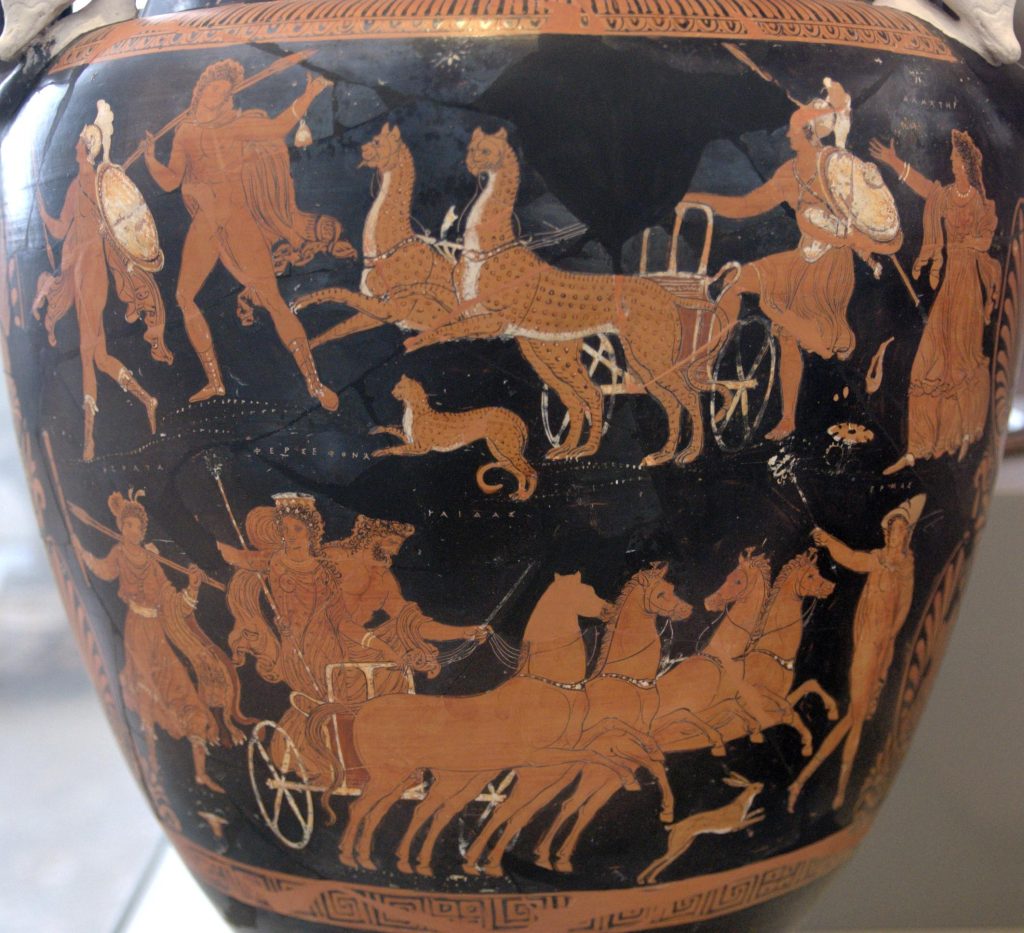
In the myth, this transition is associated with Persephone’s abduction.
In real life, it takes many forms.
Relocation, divorce, the loss of a job, the end of a long relationship, changing family circumstances, or the collapse of familiar beliefs about oneself can create the feeling that one’s former life no longer exists.
A woman still remembers who she used to be, but does not yet understand who she is becoming.
Sometimes this transition is voluntary. At other times, circumstances impose the change.
It is important not to turn suffering into a necessary condition for growth.
Traumatic experiences do not automatically make a woman wiser or stronger.
However, with support, time, safety, and the opportunity to reflect, difficult circumstances can become the beginning of profound inner changes.
Gradually, a woman discovers abilities she did not know she possessed.
She learns to make decisions independently.
She recognizes desires previously hidden beneath the expectations of others.
And she develops a new, more autonomous relationship with her own life.
The Underworld as a Space of Inner Exploration
Persephone’s Underworld can be understood as a symbol of a woman’s inner reality — a realm of feelings, memories, fantasies, fears, desires, dreams, and unconscious aspects of personality.
This inner world also contains creative possibilities, unexpected associations, intuitive insights, and new ways of understanding oneself and the surrounding world.
Persephone is symbolically associated with the ability to enter and explore this inner reality.
For such exploration to lead to transformation, a woman needs awareness — the capacity to understand her experiences, recognize their possible meanings, and integrate what she discovers into everyday life.
It is this awareness that allows Kore to gradually reveal the qualities of the Queen.
A woman may possess a rich imagination, experience vivid dreams, profound emotional states, and unusual inner images.
One woman uses these experiences for creativity and self-discovery.
Another gradually retreats into fantasies that replace meaningful action.
A third treats every inner experience as an unquestionable truth, leaving no room for alternative interpretations.
Here, once again, we encounter the distinction between Kore and the Queen.
Kore receives and experiences.
The Queen is able to receive, discern, understand, and consciously apply what she has learned.
Shadow Persephone: When Dependency Becomes Comfortable
The shadow side of the Persephone archetype is particularly interesting because dependency is not always experienced as something undesirable.
Sometimes it becomes a familiar and even attractive way of living.
Imagine a relationship in which a man takes responsibility for nearly every decision.
He determines where the couple will live, how money will be managed, whom they will socialize with, and how they will spend their free time.
At first, the woman interprets this as care and an expression of masculine strength.
She enjoys feeling protected. She no longer needs to deal with difficult questions or carry responsibility for many decisions.
But gradually, care can turn into control.
The man begins determining what clothes are appropriate for her, whom she is allowed to meet, what work she should pursue, and which interests are acceptable.
Importantly, the woman may not have entered the relationship from a dependent Kore position.
She may have been independent, confident, and accustomed to making her own decisions.
Yet beside a man she trusts, she enjoys relaxing, sharing responsibility, and allowing him to take the initiative.
Gradually, he begins offering advice that sounds reasonable. Then he suggests making certain decisions himself to spare her unnecessary concerns.
Later, he starts criticizing her independent decisions.
At first, gently. Then more insistently.
Eventually, she discovers that almost every independent action she takes produces her partner’s disapproval.
The transition has happened so gradually that she may not even recognize the moment when care became control.
In this situation, shadow Kore is expressed through a gradual loss of inner independence rather than an originally weak personality.
However, it is essential to distinguish voluntary delegation from psychological coercion. In controlling relationships, a woman’s freedom may be restricted through fear, threats, financial dependency, or isolation. Responsibility for coercive behavior belongs to the person exercising that control.
There are also situations in which a woman genuinely prefers to hand over responsibility for her life.
Shadow Kore then appears through the desire to remain a little girl who is continually cared for.
She expects someone else to provide safety, solve problems, create comfortable conditions, and bear the consequences of important decisions.
How Society Encourages Dependent Femininity
 Sometimes the dependent expressions of Kore are strengthened less by a woman’s individual character than by cultural expectations about how a woman should behave.
Imagine a woman with strongly developed Athena or Artemis qualities.
She is independent, goal-oriented, capable of making decisions, and has her own interests.
Yet people around her repeatedly say:
“You’re too strong.”
“Men don’t like women who are so independent.”
“You need to become softer.”
“Learn to be weak, and then you’ll attract a real man.”
Gradually, she begins to perceive her own strengths as obstacles to love.
So she consciously tries to change herself.
She hides her competence, restrains her initiative, and begins surrendering independent decisions.
At first, she may simply be playing a role in order to fit a relationship ideal.
But when she repeatedly suppresses her natural ways of thinking and acting, trusting her own abilities can become increasingly difficult.
In this case, Kore is not necessarily her original or dominant archetype.
The woman artificially strengthens dependent expressions of Kore because society has convinced her that this is what proper femininity looks like.
It is important to understand that softness, tenderness, and the ability to receive care are entirely compatible with independence.
A woman does not need to become helpless in order to be loved.
The Inner Girl and the Danger of Artificially Strengthening Kore
Today, conversations about healing the inner child, awakening the inner girl, and reconnecting with feminine softness have become increasingly popular.
Yet we need to distinguish healing the inner child from deliberately returning to childhood dependency in adult life.
In psychological terms, inner-child work involves becoming aware of early experiences, unmet emotional needs, fears, and patterns of responding that developed during childhood.
It does not require an adult woman to abandon her independence.
Imagine a woman with strong Athena qualities.
She is accustomed to rational thinking, organizing her life independently, and making her own decisions.
She begins participating in practices intended to awaken her inner girl and gradually becomes convinced that true femininity means obedience, helplessness, and waiting for a man’s protection.
Instead of integrating her inner girl, she begins suppressing the qualities of her mature personality.
A paradox emerges: a practice intended to help her become more whole begins restricting her possibilities.
Kore is not a universal ideal of femininity.
She represents one archetypal aspect of a woman’s nature, and her healthy expression does not require abandoning the other goddesses.
Shadow Kore and Shadow Aphrodite: Attractiveness Instead of Personal Identity
A particularly interesting combination appears when the dependent side of Kore interacts with the shadow expressions of Aphrodite.
Modern society offers countless expectations about what a woman should be.
On one hand, she is expected to be soft, accommodating, gentle, obedient, and willing to follow a man.
On the other, she is expected to remain sexually attractive, meet particular beauty standards, and inspire male desire.
This creates an image of a woman who is expected to remain an innocent girl while also being sexually appealing.
When a woman accepts these expectations as a natural model of femininity, shadow Kore and shadow Aphrodite can reinforce one another.
One encourages her to seek protection and transfer responsibility to a man.
The other encourages her to use sexual attractiveness to obtain attention, recognition, and a desired position in life.
She may sincerely believe that this is the correct way to live, without recognizing how dependent her self-worth has become on external approval.
Her attention increasingly centers on appearance.
She constantly compares herself with other women, tries to meet changing beauty standards, and experiences anxiety about age, weight, body shape, and the natural characteristics of her body.
She may choose clothing, cosmetic procedures, or even plastic surgery primarily to satisfy what she believes men expect from her.
However, short skirts, revealing clothing, sexuality, cosmetic procedures, and the desire to change one’s appearance are not inherently shadow expressions.
A woman can freely enjoy her beauty, experiment with her appearance, and express her sensuality.
The difference lies in her underlying motivation.
When a woman changes her appearance because she genuinely enjoys doing so, she is exercising her own choice.
But when she believes that she does not deserve love unless she looks a certain way, attractiveness gradually becomes a condition for recognizing her own worth.
Sometimes the roots of this perception lie in childhood.
If a girl repeatedly hears that she is not beautiful enough, too overweight, or somehow fails to meet her parents’ expectations, these judgments may gradually become part of her self-image.
A lack of recognition from significant adults, including her father, can be especially painful.
In adulthood, she may continue seeking confirmation of her attractiveness, as though trying to receive the acceptance she once lacked.
This insecurity can manifest in very different ways.
One woman tries to hide her body, remain unnoticed, and avoid situations in which her appearance might be judged.
Another constantly improves her appearance, pursues ideal proportions, and seeks reassurance that she is desirable.
Yet the underlying mechanism can be similar: her sense of worth is shaped by how she imagines others see her.
Here, we again encounter a possible interaction between Kore and Aphrodite.
Aphrodite is associated with beauty, sensuality, and the desire to be attractive.
Kore is associated with receptivity to others’ judgments and a possible dependence on approval.
When these qualities appear in their shadow expressions, a woman may lose the distinction between enjoying her own beauty and trying to earn love through her appearance.
As a result, her interests, abilities, education, creativity, and personal goals may gradually move into the background.
She begins to believe that developing independence is unnecessary because her role is to be beautiful, desirable, and find a man who will provide everything else.
In this way, shadow Kore and shadow Aphrodite begin supporting each other.
Kore gives up independence in exchange for protection.
Aphrodite uses attractiveness to obtain love and a desired position.
The woman may appear confident and sexually liberated while remaining internally dependent on the judgment of others.
Her sense of identity becomes tied to how desirable she is, how much attention she receives, and whether a man is willing to take responsibility for her life.
These patterns are reinforced by personal relationships, social media, advertising, the beauty industry, and cultural ideas about feminine success.
However, this does not mean judging women who choose traditional family roles.
A mutually agreed arrangement in which one partner provides financially while the other manages the home or raises children does not automatically indicate dependency or immaturity.
What matters is whether both partners retain dignity, freedom of choice, opportunities for development, and a meaningful voice in decisions.
A mature Persephone can be gentle and receptive.
A mature Aphrodite can be sensual and sexually attractive.
Neither needs to abandon her identity in order to be loved.
When a Strong Woman Loses Trust in Her Own Knowledge: My Personal Experience
While writing this article, I unexpectedly recognized an expression of shadow Kore in my own past — something I had never previously considered from this perspective.
I continuously engage in self-observation, reflection on my life experiences, spiritual development, and the exploration of my own evolution of consciousness.
And it was precisely while working with the Persephone archetype that I suddenly saw events from my past in an entirely different light.
What I had long understood as a story of trust, partnership, and shared decisions now revealed itself as a possible expression of shadow Kore.
When I married, I had already spent many years in business. I was accustomed to making independent decisions and trusting my own knowledge and experience.
I wanted an intelligent, strong man beside me — someone with whom I could build an equal partnership and share responsibility.
I never wanted to become weak or dependent.
I simply wanted my partner to take responsibility for certain tasks, particularly financial and administrative matters.
And I had good reasons to trust him. He was genuinely intelligent, knowledgeable, and capable of presenting convincing arguments.
Yet gradually, something happened that I did not fully recognize at the time.
I began accepting his understanding of situations instead of my own.
Even in areas where I had knowledge and experience, I increasingly allowed his reasoning to outweigh mine.
This did not happen through direct coercion.
I trusted his intelligence, his arguments, and his ability to make sound decisions.
Gradually, this influenced more than our business. It also affected other areas of family life, including how we raised our children.
And the most remarkable part is that I continued to consider myself an independent woman.
I did not notice how much my views had changed or how far I had moved away from my own understanding.
When the consequences of our decisions became destructive, I had to reconsider what was happening.
At a certain point, it was as though I had taken off rose-colored glasses.
I saw what I had previously failed to recognize, and I could no longer return to my former perception.
I began returning to myself — to my own thinking, knowledge, values, and ability to determine the direction of my life.
This also changed our relationship.
I could no longer remain the woman I had gradually become during our marriage.
I began acting according to my own understanding again.
Many years later, during a meditation, a striking image appeared to me: I saw that I had once seemingly switched off my own intellect and handed my husband the key to it.
For me, this image became a symbol of what had happened.
I had not lost my abilities.
But I had gradually handed another person the authority to determine which knowledge and decisions I should trust.
This is where I now recognize a possible expression of shadow Kore.
She does not necessarily appear because a woman is weak, lacks her own opinions, or fears responsibility.
Sometimes she emerges when an independent woman trusts another person so deeply that she gradually stops relying on her own understanding.
Yet another aspect of Persephone is equally important in this story: the Queen.
My return to myself happened through awareness.
I did not simply begin making independent decisions again. I recognized the process through which I had once unknowingly surrendered part of my inner autonomy.
And that experience changed my understanding of trust.
I still believe that close relationships require sharing responsibility, listening to each other, and respecting a partner’s knowledge.
But I now recognize a fundamental distinction between trusting another person and ceasing to trust myself.
We can share responsibilities without giving another person the authority to define our reality.
We can love, respect, and trust a partner while preserving our own knowledge and independence.
For me, this is one of the most important expressions of mature Persephone — the Queen who can receive and appreciate another person’s experience without losing her own inner world.
Persephone and the Other Goddesses: How Archetypes Complement One Another
When exploring combinations of archetypes, it is important to understand that developing the qualities of one goddess does not mean another disappears.
Persephone retains her receptivity, inner depth, and adaptability while integrating additional qualities.
Persephone and Athena
Athena contributes rational thinking, strategy, practicality, and the ability to make decisions.
Persephone contributes emotional receptivity, sensitivity to subtle changes, and openness to new possibilities.
For example, a woman intuitively senses tension between employees, notices unspoken emotions, and recognizes that a deeper issue lies beneath an apparent disagreement.
This reflects Persephone.
Athena helps her analyze the situation, distinguish assumptions from facts, and develop a practical solution.
Together, these qualities unite sensitivity with clarity of thought.
Persephone and Artemis
Artemis contributes independence, determination, and the ability to follow one’s own path.
Persephone retains flexibility, receptivity, and a willingness to explore the unknown.
For example, a woman decides to move to another country.
Artemis helps her define her goal, overcome obstacles, and organize the necessary steps.
Persephone allows her to remain receptive to a new culture, learn from the people around her, and gradually discover unfamiliar aspects of herself.
Artemis provides direction, while Persephone helps her experience the journey in greater depth.
Persephone and Aphrodite
Aphrodite awakens sensuality, creative energy, pleasure, and the capacity for passionate emotional connection.
Persephone contributes receptivity, inner depth, and curiosity about the hidden dimensions of another person.
For example, a woman experiences powerful romantic attraction.
Aphrodite appears through desire, passion, the enjoyment of intimacy, and creative inspiration.
Persephone appears through her sensitivity to her partner’s emotional state, her awareness of changes within the relationship, and her discovery of new aspects of her own inner world.
In their mature combination, sensuality does not require the loss of independence, and receptivity does not become submission.
Persephone and Hera
Hera contributes the desire for lasting partnership, mutual commitment, and the conscious creation of a shared life.
Persephone retains openness to change, emotional flexibility, and the ability to explore the inner dimensions of relationships.
For example, in a long marriage, a woman values stability, loyalty, and shared life goals — qualities associated with Hera.
At the same time, she remains sensitive to changes in her partner, willing to discover new dimensions of their relationship and reconsider familiar assumptions.
This reflects Persephone.
In a mature combination, Hera helps create stability, while Persephone keeps the relationship open to growth rather than allowing it to become a rigid system of roles.
Persephone and Demeter
Demeter contributes nurturing, care, support, and the ability to create conditions in which others can grow.
Persephone contributes receptivity, sensitivity to inner experiences, and openness to change.
For example, a mother cares for her child, provides safety, and supports the child’s development.
This reflects Demeter.
Persephone helps her recognize the child as a separate individual, observe changes in the child’s inner world, and gradually accept growing independence.
In their mature combination, Demeter’s care is enriched by Persephone’s receptivity without turning into excessive control.
Thus, archetypes do not replace one another.
They interact, creating a wider range of possibilities through which a woman’s individuality can express itself.
Queen of the Underworld: The Mature Persephone
In psychological interpretation, the Queen represents the mature expression of the Persephone archetype.
Her receptivity no longer means helplessness.
Her ability to adapt does not require abandoning her values.
Her openness to the inner world is united with the ability to live and act in external reality.
Another important expression of mature Persephone is her capacity to become a guide between worlds.
In mythology, Persephone belongs to both the earthly realm and the Underworld. She knows both worlds and can move between them.
In this role, her image is closely connected with Hecate, the goddess of crossroads, thresholds, magic, and transitions between different states of existence.
Psychologically, this symbolizes a woman’s ability to connect the conscious and unconscious, explore the depths of inner experience, understand hidden emotions, and help others navigate difficult periods of transformation.
From a spiritual and esoteric perspective, this ability takes on another dimension.
Mature Persephone may be reflected in a woman with pronounced intuitive or purported extrasensory abilities, or in someone who serves as a medium, shamanic practitioner, healer, or spiritual guide.
In various spiritual traditions, such women are understood as intermediaries between visible and invisible worlds, between ordinary reality and other levels of existence.
In my own worldview, this is not limited to symbolic work with the unconscious. I remain open to the possibility of interaction with other dimensions and forms of consciousness, while recognizing that such abilities and explanations have not been scientifically established.
The distinction between Kore and the Queen is especially important here.
Kore is receptive to the unknown but does not always understand the nature of her experiences.
The Queen possesses awareness, inner stability, and the capacity to discern her impressions, interpret them thoughtfully, and approach what she experiences with responsibility.
In this mature expression, Persephone becomes a guide who can accompany other women through processes of self-discovery, transition, and transformation.
In combination with the archetype of Hecate, this dimension of Persephone acquires particular depth.
Hecate symbolically illuminates the path through the unknown, while Persephone, as Queen, knows the realm through which that path leads.
The mature Persephone understands the feelings of others without assuming responsibility for every emotion they experience.
She maintains close relationships while preserving independence.
She explores the unknown without losing the ability to distinguish external reality from her own interpretations.
The Queen does not necessarily become domineering, rigid, or eager to control others.
Her strength is expressed through calmness, inner stability, and a clear understanding of her own abilities.
She knows that she can make decisions and accept responsibility for them.
She accepts help without becoming dependent.
She trusts another person while preserving her own perspective.
Most importantly, mature Persephone does not lose Kore.
The inner girl continues to live within her as the ability to experience joy, wonder, playfulness, curiosity, and spontaneity.
But now the Queen stands beside that inner girl — the mature aspect of the woman who can consciously guide her own life.
Persephone and the Evolution of Consciousness
When we consider the Persephone archetype within a broader philosophical context, her transformation from Kore into the Queen can be understood as a symbol of the evolution of consciousness.
In my understanding, the evolution of consciousness involves a gradual transformation in the quality of perception, the expansion of awareness, and the integration of experience.
A woman may undergo an unusual inner state, gain a new understanding, or encounter circumstances that completely transform her previous beliefs.
Yet the experience itself does not necessarily produce lasting transformation.
New understanding needs to become integrated into real life — through actions, relationships, decisions, and ways of responding to circumstances.
This is where the image of Persephone becomes especially meaningful.
Kore symbolizes openness to experience.
The Underworld represents an encounter with unknown aspects of one’s own nature.
The Queen embodies the ability to consciously engage with what was previously unfamiliar or misunderstood.
However, this does not mean that every woman must experience suffering or crisis in order to develop the mature qualities of Persephone.
Inner development also takes place through love, creativity, learning, meditation, relationships, travel, and many other forms of life experience.
Moreover, maturity does not necessarily develop equally in every area of life.
A woman may be independent and confident professionally while still expressing dependent patterns in intimate relationships.
She may have profound spiritual experiences while continuing to learn practical responsibility.
She may understand other people’s feelings exceptionally well while still learning how to express her own needs clearly.
Archetypal development should therefore not be imagined as a rigid staircase in which each new level permanently eliminates the previous one.
Different states and possibilities coexist within the same woman.
Development involves gradually becoming aware of them, finding balance among them, and learning to consciously use one’s inner resources.
Kore and the Queen: Two Sides of One Woman
The story of Persephone is particularly fascinating because her maturity does not require the final disappearance of the young Kore.
She continues to belong to two worlds.
This can be understood as a profound symbol of feminine nature.
Within every woman coexist spontaneity and wisdom, receptivity and independence, curiosity and life experience.
A mature woman retains the ability to experience wonder without losing clarity of thought.
She remains tender without becoming helpless.
She expresses sensuality without making attractiveness the sole source of her worth.
She accepts care and love without surrendering responsibility for her own life.
Persephone does not have to stop being Kore.
She allows the inner girl to continue exploring the world while the mature Queen maintains the ability to discern, choose, and act consciously.
Perhaps this is one of the most beautiful aspects of the Persephone archetype.
Her development is not the transformation of one personality into an entirely different one.
It is the gradual unfolding of possibilities that already exist within the same woman.
Kore preserves openness to life. The Queen develops depth of understanding and inner independence. Together, they create the ability to experience the world in all its diversity while remaining true to oneself.
Sources
- Jean Shinoda Bolen — Goddesses in Everywoman.
- Galina Bednenko — Greek Goddesses: Archetypes of Femininity (Russian original: «Греческие богини. Архетипы женственности»).