
Living Artemis: Women Who Never Lost Their Spirit of Freedom
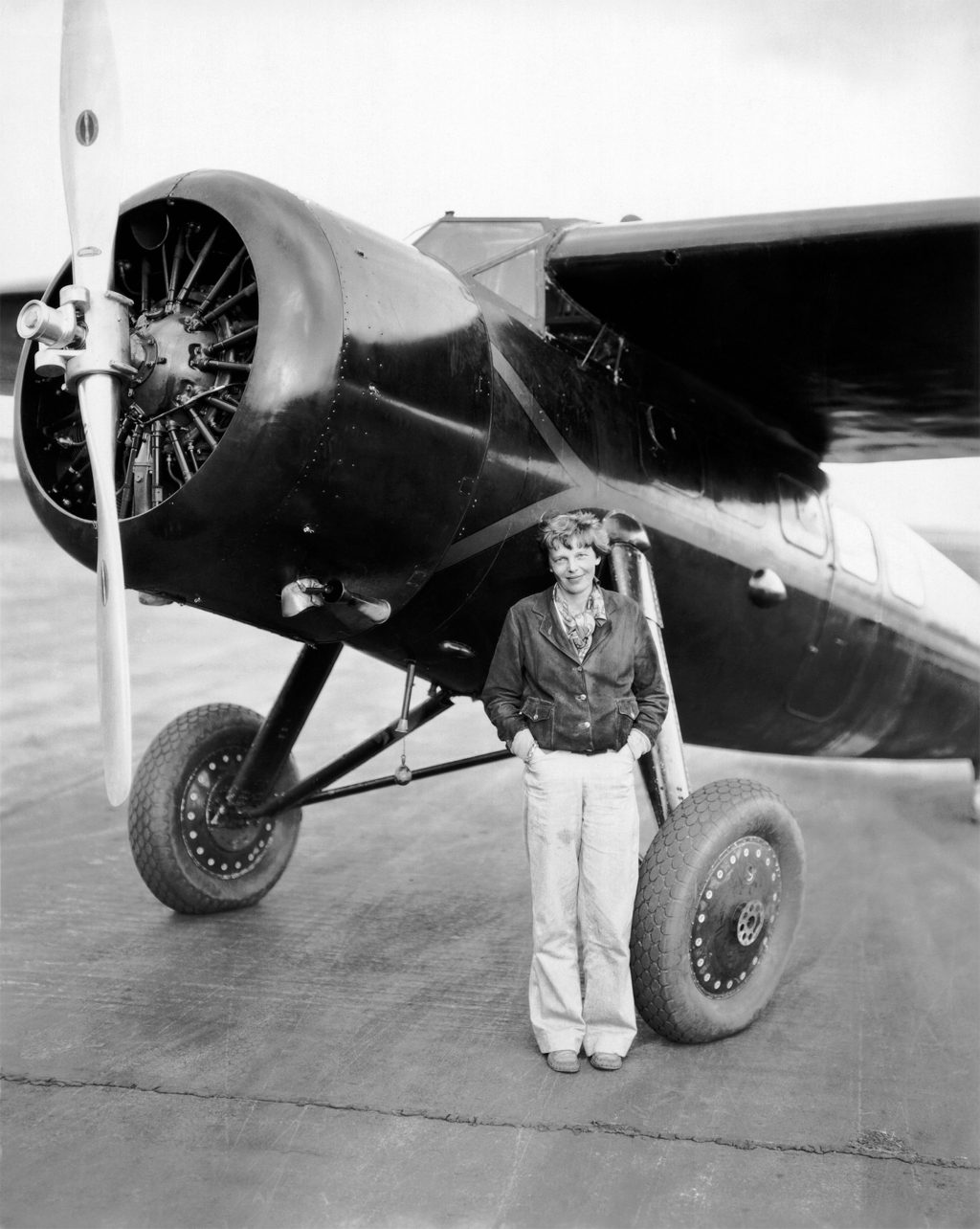
There are women whose lives seem to unfold beyond the boundaries of the familiar world. From an early age, they feel drawn toward unexplored territories, extraordinary experiences, and possibilities that others may not even consider. Something within them calls them to discover how far they can go, what they can accomplish, and what lies beyond the next horizon.
These women carry within themselves the energy of Artemis.
In our exploration of the Greek Goddess Archetypes, we have already encountered Artemis as the eternally youthful goddess of freedom, wilderness, independence, and feminine strength. We have also explored how her energy manifests in a woman’s consciousness and how it evolves through the awakening of other goddesses.
Now we will meet three women whose stories allow us to observe this divine energy in action.
One followed her destiny into the skies. Another entered the forests of Africa and transformed humanity’s understanding of the natural world. The third emerged from the imagination of a contemporary writer, becoming one of the most recognizable young heroines of modern literature and cinema.
Amelia Earhart, Jane Goodall, and Katniss Everdeen.
Through their stories, we can discover three different expressions of Artemis and observe how the presence of other goddesses can enrich and transform her extraordinary power.
Amelia Earhart: The Woman Who Made the Sky Her Home
A little girl who wanted to fly
Long before Amelia Earhart became one of the most famous women in the world, she was an adventurous little girl growing up in Kansas at the beginning of the twentieth century.
Amelia and her younger sister Muriel enjoyed exploring their surroundings, climbing trees, and inventing games that were considered rather unusual for girls of their generation. Amelia collected newspaper stories about women who had succeeded in professions traditionally reserved for men.
She was already discovering that the possibilities available to a woman were far greater than society imagined.
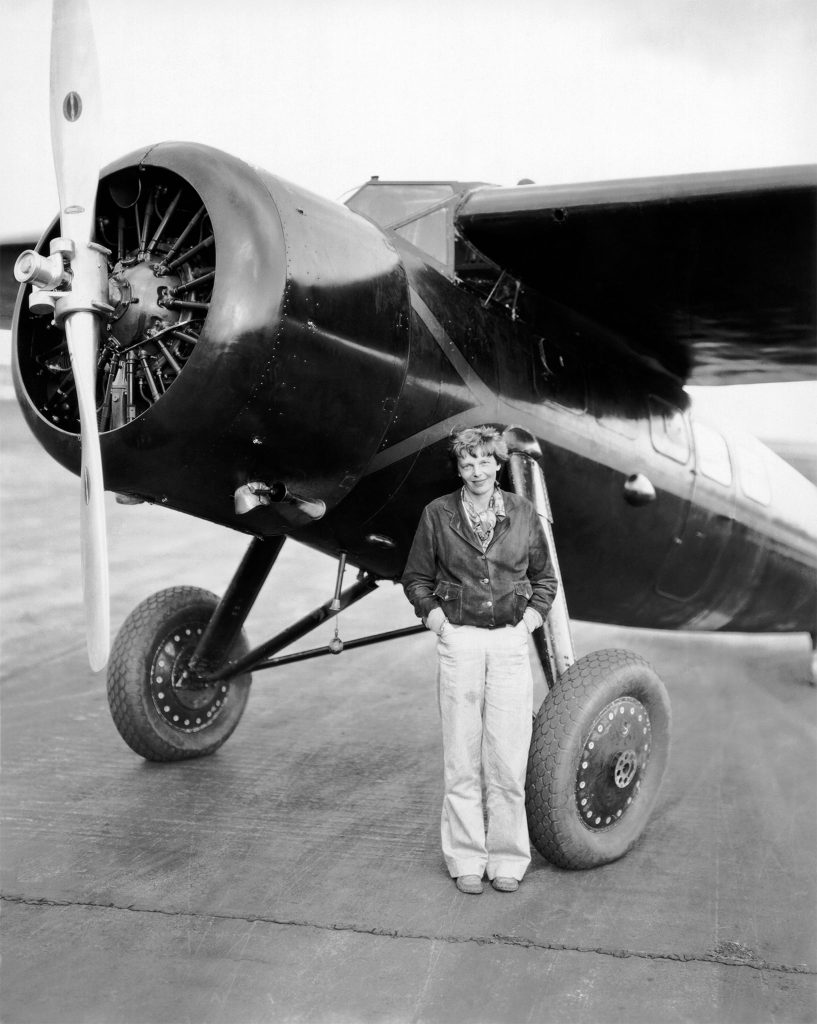 In December 1920, at the age of twenty-three, Amelia experienced something that changed the direction of her entire life. At an airfield in California, she took a short airplane ride with pilot Frank Hawks.
The flight lasted only a few minutes, but by the time she returned to the ground, an entirely new future had opened before her.
She knew she had to learn to fly.
Amelia found work, saved money for flying lessons, and began training with a female aviation instructor, Neta Snook. Eventually, she acquired her own small yellow airplane, which she affectionately named the Canary.
The sky became her wilderness, an immense territory where she could explore her abilities and experience the freedom she had sought since childhood.
National Air and Space Museum+1
How beautifully this story reflects the awakening of Artemis.
A single experience can sometimes reveal an entire dimension of our nature that had previously remained unknown to us. Something within our consciousness recognizes a familiar energy in a completely unfamiliar situation, and suddenly we understand that our life can take a direction we had never imagined.
For Amelia, that moment came when her feet left the Earth.
Alone above the Atlantic
On May 20, 1932, Amelia took off from Newfoundland in her red Lockheed Vega, intending to cross the Atlantic Ocean alone.
Ahead of her lay thousands of miles of open water.
During the flight, she encountered severe weather, freezing conditions, and mechanical difficulties. She had to continuously evaluate the condition of her aircraft, respond to changing circumstances, and make decisions upon which her life depended.
Approximately fifteen hours later, she landed in a pasture in Northern Ireland.
Amelia had become the first woman to fly solo nonstop across the Atlantic Ocean.
In this remarkable achievement, we can recognize the interaction between two goddesses.
Artemis provided the courage to venture into the unknown, the extraordinary concentration required to remain focused on a distant destination, and the willingness to rely upon her own abilities.
Athena was present in her technical knowledge, preparation, judgment, and capacity to respond intelligently to dangerous and constantly changing conditions.
This combination is particularly powerful. The adventurous spirit of Artemis acquires the necessary knowledge and strategic understanding to transform a seemingly impossible dream into reality.
A marriage on her own terms
One of the most fascinating stories in Amelia’s life concerns her relationship with George Palmer Putnam, a publisher who played an important role in her aviation career.
George wanted to marry her, but Amelia hesitated. Marriage, particularly in the early twentieth century, carried expectations that could dramatically change a woman’s life.
Amelia had already discovered her calling. She had experienced the extraordinary freedom of determining her own direction, and she was deeply concerned about losing that freedom.
Before their wedding in 1931, she gave George a remarkable letter expressing her understanding of the partnership she was prepared to enter.
She wanted both of them to retain their personal freedom. She also proposed that if their marriage failed to bring them happiness, they should be free to separate after a year.
George accepted her conditions, and they remained married until her disappearance.
He continued to support her aviation career, while Amelia continued to pursue the life she had chosen.
Through this relationship, we can observe an interesting encounter between Artemis and Hera.
For a woman in whom Artemis is particularly strong, marriage can raise profound questions. How much of her individual freedom will she retain? Will she still be able to follow her calling? Will her husband understand her need for independence?
Amelia attempted to create a form of partnership that would allow her individuality to coexist with married life.
We can see her relationship as an example of how the energy of Hera can begin to unfold within a woman whose life has long been guided by Artemis.
Every woman with a strong Artemis eventually has the opportunity to discover what freedom means within a relationship. Through the awakening of other goddesses, she may gradually discover new dimensions of love and partnership without losing the extraordinary qualities she has already developed.
Opening the skies to other women
Amelia understood that her achievements could influence the lives of women she had never met.
In 1929, she became one of the founding members of the Ninety-Nines, an organization created to support female pilots. She later became its first president.
She wrote books, gave lectures, and encouraged women to enter aviation.
National Air and Space Museum
Here we encounter another beautiful expression of Artemis — her devotion to female companionship and her desire to help other women discover their own strength.
Amelia’s individual freedom began to open possibilities for an entire generation of women.
In July 1937, during an attempt to fly around the world, Amelia and her navigator Fred Noonan disappeared over the Pacific Ocean. Despite an extensive search, they were never found.
sirismm.si.edu
She was thirty-nine years old.
Perhaps one of the most meaningful aspects of her legacy is that the freedom she discovered continued to expand through the lives of other women.
Countless female pilots have since crossed oceans, explored the skies, and ventured beyond the atmosphere of our planet.
Through Amelia Earhart, we encounter Artemis as the force that encourages a woman to discover what she is capable of and, through her own journey, expand the possibilities available to others.
Jane Goodall: The Woman Who Carried the Forest Into the Human World
The little girl in the henhouse
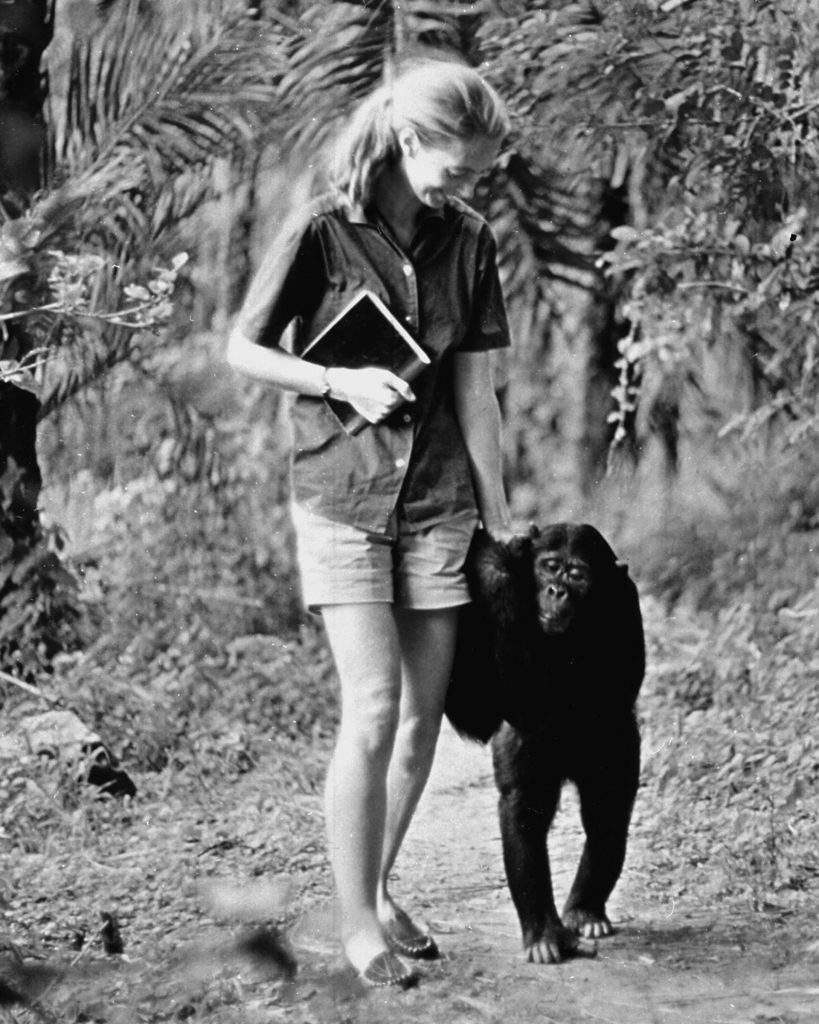 When Jane Goodall was a little girl, she became fascinated by a question: how does an egg come out of a chicken?
Determined to find the answer, she hid inside a henhouse and waited patiently.
Hours passed.
Her family became increasingly concerned because nobody knew where she was.
When Jane finally emerged, she was full of excitement. She had witnessed a chicken laying an egg and could hardly wait to share her discovery.
Her mother, who had been worried about her disappearance, listened to her story with genuine interest.
On another occasion, Jane brought earthworms into her bed because she wanted to understand how creatures without legs could move.
These seemingly insignificant childhood episodes reveal something extraordinary about the young Jane.
She already possessed the ability to become completely absorbed in the mysteries of the natural world.
And, just as Zeus encouraged the young Artemis, Jane’s mother gave her daughter the freedom to explore her unusual interests.
As a child, Jane read stories about Tarzan and dreamed of traveling to Africa, living among wild animals, and writing about their lives.
For a young girl growing up in England in the 1930s and 1940s, such a dream seemed almost impossible.
But Jane never abandoned it.
The forest that changed her life
As Jane grew older, Artemis continued to inspire her, leading her toward new adventures, unexplored territories, and extraordinary discoveries.
At the age of twenty-three, Jane finally traveled to Africa. There she met the anthropologist Louis Leakey, who recognized something exceptional in her curiosity and understanding of animals.
In 1960, at the age of twenty-six, she arrived at Gombe, on the shores of Lake Tanganyika in what is now Tanzania, accompanied by her mother.
She had no university degree.
What she possessed was an extraordinary capacity for observation, patience, determination, and a genuine fascination with the lives of other beings.
For months, Jane walked through the forest, searching for chimpanzees and observing them from a distance. The animals initially fled whenever she approached.
Gradually, one chimpanzee, whom she named David Greybeard, became accustomed to her presence.
Through him, Jane began to enter a world that had previously remained largely inaccessible to human observation.
One day, Jane observed something extraordinary.
David Greybeard was sitting beside a termite mound. He picked a long blade of grass, carefully inserted it into a small opening, and waited. When he pulled it out, termites were clinging to the grass. He ate them and repeated the process.
But an even more remarkable discovery followed. Jane observed chimpanzees taking leafy twigs and removing their leaves to make tools suitable for collecting termites.
They understood how to modify an object in order to accomplish a particular task.
After observing this fascinating behavior, Jane tried the technique herself. And it worked!
At the time, the ability to manufacture tools was widely regarded as one of the fundamental characteristics that distinguished human beings from other animals.
When Jane reported her discovery to Louis Leakey, he responded with a remarkable observation: scientists would now have to redefine what it meant to be human, redefine what constituted a tool, or accept chimpanzees as human beings.
Through her patience and curiosity, this young woman challenged one of the fundamental assumptions of contemporary science.
The little girl who had once spent hours in a henhouse, trying to understand how a chicken lays an egg, was now sitting in an African forest, observing a chimpanzee with that same youthful fascination.
Her curiosity had never diminished. It had simply opened the door to an increasingly extraordinary world.
Through Jane, Artemis revealed the remarkable intelligence of nature, while Athena helped transform curiosity into knowledge that would enrich human consciousness.
Discovering the consciousness of other beings
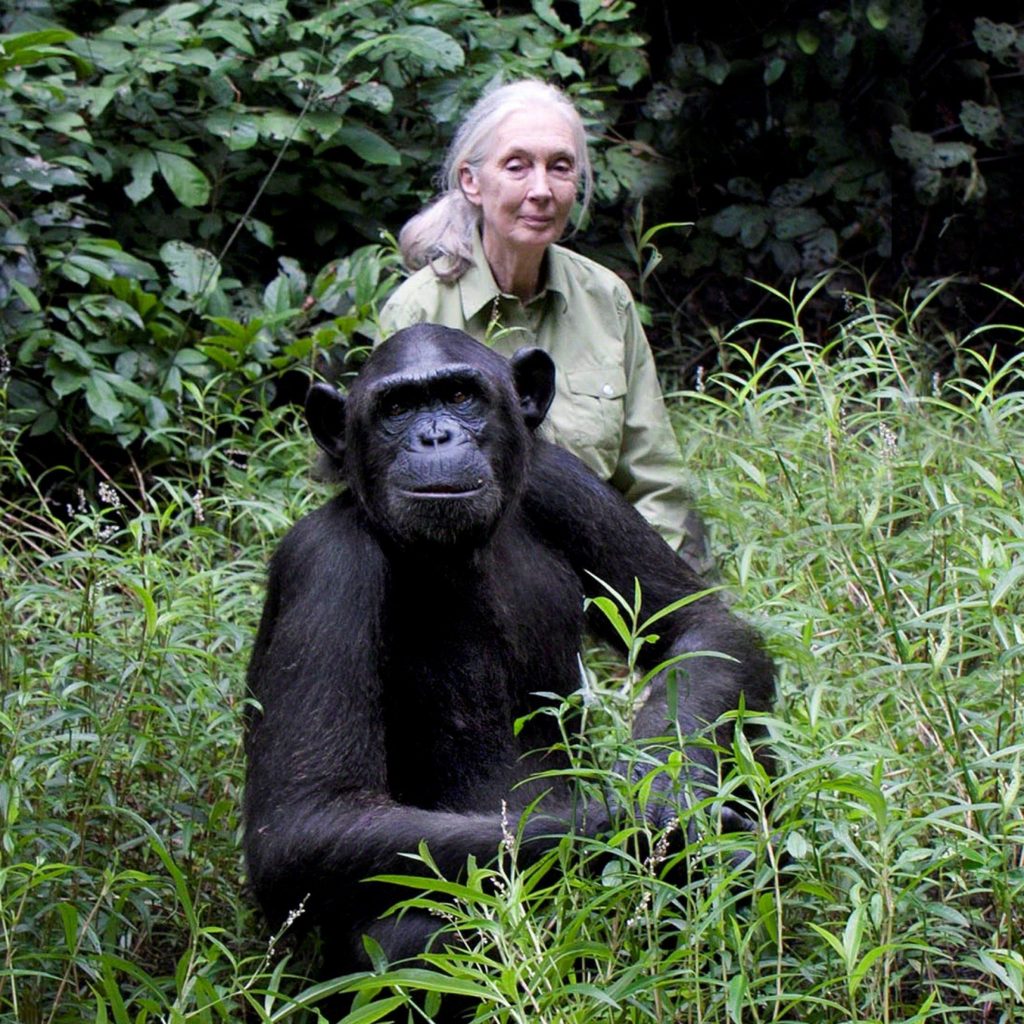 What makes Jane Goodall particularly interesting from the perspective of the Artemis archetype is the nature of her relationship with the animals she studied.
From the beginning, Jane approached chimpanzees as conscious living beings, each possessing a unique personality, intelligence, emotions, and an individual way of experiencing the world.
While scientific researchers commonly identified animals by numbers, Jane gave them names.
David Greybeard, Flo, Fifi, Flint — each became an individual whose life, relationships, and emotional experiences were worthy of attention.
She observed their friendships and family relationships, their expressions of affection, their moments of joy and sadness, and the ways in which they responded to the loss of those close to them.
Her prolonged presence among them revealed cooperation, maternal devotion, grief, aggression, compassion, and conflict.
Through her work, humanity was invited to recognize familiar qualities in beings whose inner lives had long been underestimated.
And perhaps one of Jane’s greatest gifts to humanity was her willingness to approach other forms of life with the openness necessary to discover their individual nature.
Through Artemis, Jane entered the natural world with a profound respect for life, allowing her to perceive dimensions of existence that others had overlooked.
Through Athena, she developed her observations into scientific knowledge. She eventually earned a doctorate in ethology at Cambridge University in 1966, despite never having completed an undergraduate degree.
Through Demeter, we can recognize her extraordinary capacity for care and her growing concern for the well-being of the living beings she had come to know.
Her discoveries invite us to reflect on the possibility that consciousness expresses itself through the extraordinary diversity of life on Earth, and that human beings have only begun to understand its many manifestations.
Her life demonstrates how the combination of several divine energies can transform a childhood fascination into something of profound significance for humanity.
The day Artemis decided to leave the forest
In 1986, at the age of fifty-two, Jane Goodall participated in an international conference in Chicago that brought together researchers studying chimpanzees.
There she learned more about the destruction of their natural habitats, the conditions in which captive chimpanzees were kept, and the threats facing their survival across Africa.
This experience marked a turning point in her life.
Jane had spent decades discovering the extraordinary richness of life within the forest. Now she realized that protecting that life required her to enter the human world in an entirely different capacity.
The woman who loved the solitude of the African wilderness began traveling internationally, speaking to audiences, educating communities, and encouraging people to take responsibility for the future of the Earth.
Artemis was leaving her beloved forest.
This moment is perhaps one of the most remarkable examples of the evolution of this archetype.
As we discussed in our article The Artemis Archetype: The Freedom to Be Yourself, there comes a time when the experience offered by one goddess needs to be complemented by the qualities of others.
Jane’s profound love of the wilderness was now finding expression through Athena’s ability to organize, educate, and influence society, and through Demeter’s desire to protect and nurture life.
Her love for the forest became the foundation of a new relationship with human society.
Twelve young people who wanted to change the world
In 1991, twelve young people in Tanzania approached Jane with their concerns about the problems they witnessed around them.
They wanted to help but felt overwhelmed by the magnitude of the challenges facing the world.
Jane encouraged them to begin with practical actions within their own communities.
From this encounter emerged Roots & Shoots, an international youth program that inspires young people to create positive change for animals, people, and the environment.
Later, Jane and her organization also began working with communities near Gombe to restore forests and improve local living conditions. The future of the chimpanzees was intimately connected with the well-being of the people living around their habitat.
Her understanding of nature had expanded into an understanding of the interconnectedness of life.
The energy of Artemis, which had once drawn a little girl into the henhouse, now inspired generations of young people to participate in the preservation of our planet.
Jane continued her work into her nineties. She passed away in 2025 at the age of ninety-one.
Her life offers us a beautiful example of the eternal youthfulness of consciousness.
She never lost the curiosity of the little girl who dreamed of Africa. That curiosity continued to evolve, acquiring the depth of knowledge, compassion, wisdom, and conscious responsibility.
Throughout her long life, Artemis continued to awaken in her the desire to explore new possibilities. Each new discovery opened another dimension of existence, inviting other goddesses to manifest through her consciousness.
Through Jane Goodall, we can see what becomes possible when Artemis, Athena, and Demeter join their energies in the service of life on Earth.
Katniss Everdeen: The Young Huntress Who Learned to Love Again
 Our third heroine belongs to the world of literature and cinema. Yet fictional characters sometimes reveal archetypal energies with extraordinary clarity, allowing us to observe their manifestations and transformations throughout an entire human story.
Katniss Everdeen, the heroine of Suzanne Collins’s The Hunger Games trilogy, is one of the most recognizable contemporary embodiments of the young Artemis.
Even her name carries an interesting symbolism.
Katniss is the name of an aquatic plant with arrow-shaped leaves and edible roots. Its scientific name, Sagittaria, is connected to the Latin word for an arrow. Her creator deliberately gave her a name that united the image of an archer with the nourishing gifts of the natural world.
mediaroom.scholastic.com
In Katniss, these two qualities already coexist.
She is a huntress and a protector of life.
Beyond the fence
Katniss grows up in District 12, one of the poorest regions of a fictional civilization called Panem.
Her father dies in a mining accident when she is eleven. Her mother falls into a prolonged state of despair, leaving Katniss with the responsibility of caring for her younger sister, Prim.
The girl learns to survive by entering the forests beyond the boundaries of her district, hunting animals, gathering edible plants, and exchanging what she finds for other necessities.
The forest becomes her sanctuary.
Here she can breathe more freely, rely upon her abilities, and experience moments of peace away from the restrictions imposed upon her life.
Her father had taught her to hunt and recognize the gifts of nature. Through the knowledge he left her, she finds the strength to protect herself and her family.
Unlike the little goddess Artemis, who received everything she requested from her father Zeus, Katniss is forced to develop her independence through hardship.
Nevertheless, the energy that awakens within her is unmistakably that of Artemis.
There is already a powerful presence of Demeter as well. At an age when she should still be exploring her own childhood, Katniss has become responsible for nurturing and protecting another human being.
The moment that revealed her true strength
Every year, the rulers of Panem select children from the districts to participate in a televised competition in which they must fight for survival.
On the day of the selection, Katniss watches in horror as the name of her twelve-year-old sister is drawn.
Without hesitation, she volunteers to take Prim’s place.
This single decision changes the course of her life and eventually the destiny of her entire society.
In that moment, we witness an extraordinary union of Artemis and Demeter.
Artemis gives Katniss the courage to stand between her sister and danger.
Demeter gives that courage its deepest purpose — the protection of someone she loves.
The strength within Katniss has found something infinitely more important than her own survival.
Flowers for Rue
Inside the arena, Katniss befriends a young girl named Rue, who reminds her of Prim.
Rue is small, intelligent, and remarkably skilled at surviving among the trees. The two girls develop a bond and begin working together.
But Rue is eventually killed.
Katniss remains beside her, singing to her as she dies. Then she gathers wildflowers and arranges them around the girl’s body.
In a competition designed to reduce human beings to objects of entertainment, Katniss restores dignity to the life of one little girl.
The Hunger Games by Suzanne Collins+1
Her gesture contains an entire language of the divine feminine.
Artemis is present in her connection with Rue, her desire to protect a young girl, and her instinctive resistance to injustice.
Demeter is present in the tenderness with which she accompanies Rue through her final moments.
And we can also recognize a manifestation of Aphrodite in Katniss’s intuitive desire to surround death with beauty and express through flowers what words could no longer communicate.
This is a particularly moving example of how the goddesses can begin to interact within a woman even when she has little conscious understanding of her own emotional nature.
Learning to live among people
Throughout the trilogy, Katniss gradually finds herself drawn into a world far beyond the forests she loves.
She becomes a symbol of resistance, inspiring people across Panem. Her actions now have consequences for thousands of lives.
Her individual strength needs to acquire an entirely different form.
She must learn to understand human motivations, recognize manipulation, navigate complicated social relationships, and make decisions within circumstances she cannot control.
Here the qualities of Athena become essential.
Yet perhaps the greatest challenge of her life lies in an entirely different realm.
Katniss has spent so many years protecting herself and those she loves that emotional openness has become difficult for her. She associates vulnerability with danger and has little desire to bring children into a world filled with violence.
Her relationship with Peeta gradually invites her into a different experience of existence.
Peeta possesses qualities that are profoundly important for a woman whose Artemis has long been occupied with survival. He offers tenderness, emotional warmth, patience, and the possibility of a peaceful life.
He helps her discover a dimension of human existence that had almost disappeared from her world.
Love.
A life beyond survival
By the end of the series, Katniss has experienced extraordinary losses, including the death of the very sister she had originally set out to protect.
Her journey has brought her face to face with the limits of her power.
She returns to District 12, where she gradually rebuilds her life with Peeta. Over time, they create a family and have two children.
Her wounds do not miraculously disappear. The memories of what she has lived through continue to accompany her. Together, however, they discover ways to remember the people they have lost and gradually return to life.
In her eventual relationship with Peeta, we can recognize the awakening of Hera — the goddess who opens the possibility of a shared destiny.
Aphrodite is present in the gradual return of emotional warmth, intimacy, and love.
And Demeter, who had already manifested so powerfully in her devotion to Prim, finds a new expression through motherhood.
Artemis remains within her. The huntress, the woman who loves the forest, and the young girl who possesses an unwavering sense of her own dignity are all still part of who she is.
Her consciousness has expanded to accommodate new dimensions of life.
Through Katniss Everdeen, we can observe how the strength of Artemis, once essential for survival, can eventually become the foundation upon which a woman creates a new reality.
Three Women, Three Expressions of Artemis
Amelia Earhart, Jane Goodall, and Katniss Everdeen belong to entirely different worlds.
Yet each of them reveals something essential about the nature of Artemis.
Through Amelia, we discover the extraordinary possibilities that open before a woman when she trusts her abilities and follows her calling. We also encounter the question of how personal freedom can coexist with partnership.
Through Jane, we discover the evolution of a woman’s love for nature into conscious service to the Earth. Her life shows us how the curiosity of childhood can mature into compassion, knowledge, and responsibility while retaining its original vitality.
Through Katniss, we discover the transformative journey of a young woman whose independence and strength gradually become enriched by tenderness, emotional openness, partnership, and motherhood.
Each story reveals a different stage in the evolution of feminine consciousness.
And perhaps the most important thing we can learn from these women is that a divine energy acquires an entirely new potential when it begins to interact with other divine energies within us.
The courage of Artemis becomes more powerful through the wisdom of Athena.
Her protective strength acquires greater depth through the compassion of Demeter.
Her freedom discovers new dimensions through the love of Aphrodite.
Her independence becomes part of a consciously created partnership through Hera.
And her desire to explore the unknown can eventually lead her into the profound mysteries of consciousness itself, where Hecate awaits.
Let Your Inner Artemis Live
You do not have to cross an ocean alone, spend decades in the African wilderness, or become the heroine of an extraordinary adventure to discover Artemis within yourself.
Perhaps she has been waiting for you in a place you have always dreamed of visiting.
Perhaps she lives within an interest you have never allowed yourself to pursue, a mountain you have always wanted to climb, a journey you postponed many years ago, or the quiet desire to spend more time in the presence of nature.
Perhaps she is the little girl within you who never had enough time to explore the world because life asked her to grow up too soon.
She may awaken at any age.
Give her the opportunity to discover what she has been longing to experience. Allow her to bring movement, curiosity, excitement, and the joy of exploration into your life.
And, as she awakens, invite the other goddesses to accompany her on this journey.
Within every woman exists an extraordinary diversity of divine qualities. Through their gradual awakening and conscious interaction, she discovers an ever-expanding capacity to experience the richness of human existence.
May Artemis always preserve within you the spirit of freedom, the courage to follow your own path, and the youthful wonder of a soul that knows there is still so much beauty waiting to be discovered.
Literature and Sources
- Amelia Earhart. The Fun of It.
- Amelia Earhart. Last Flight.
- Smithsonian National Air and Space Museum — Amelia Earhart’s life, aviation achievements, and historical collections.
- Smithsonian American Women’s History Museum — Amelia Earhart’s Trailblazing Life in Aviation.
- Jane Goodall. In the Shadow of Man.
- Jane Goodall. Reason for Hope: A Spiritual Journey.
- The Jane Goodall Institute — Official biography and historical timeline.
- Suzanne Collins. The Hunger Games (2008), Catching Fire (2009), Mockingjay (2010).
- Jean Shinoda Bolen. Goddesses in Everywoman.
- Galina Bednenko. Greek Goddesses: Archetypes of Femininity.
- Philosophical materials of the AMOREI Consciousness Project.