Persephone in Real Life: Three Women Who Discovered Another Kind of Power

The stories of Tina Turner, J. K. Rowling, and Selena Gomez reveal how the ancient myth of Persephone can illuminate some of the most difficult and transformative passages in a woman’s life.
There is a moment in the myth of Persephone that deserves more attention than it usually receives.
When Persephone returns from the underworld, the world above has not become unfamiliar. Her mother is still there. The earth can bloom again. The sunlight has not changed.
But Persephone has.
The young Kore, who once lived among flowers under her mother’s protection, has encountered something that cannot be forgotten. She has seen the realm of death, crossed the boundaries of her childhood world, and acquired a place of her own in a reality her mother cannot entirely control.
She returns with knowledge.
And that knowledge makes it impossible for her to become exactly the girl she was before.
Perhaps this is why the myth continues to speak to women whose lives bear little resemblance to ancient Greece.
A woman’s descent into the underworld may take the form of a relationship that gradually destroys her freedom. It may arrive through bereavement, a marriage that collapses, a frightening diagnosis, or the realization that the identity she has spent years maintaining no longer feels like her own.
There is no reason to romanticize these experiences. Pain does not automatically make us wiser, and suffering is never a requirement for becoming a whole person.
Yet some women emerge from difficult chapters with a different understanding of what they can endure, what they must refuse, and what truly belongs to them.
Three famous women offer especially revealing examples of this process.
Their lives are not modern retellings of Persephone’s myth. They are individual human stories, full of contradictions and circumstances that no single archetype can explain.
But within each biography, we can recognize a passage from one kind of identity toward another.
Tina Turner: When Freedom Cost More Than Fame
 Imagine being one of the most electrifying performers in American music and still having almost no freedom in your private life.
By the 1970s, Tina Turner had spent years performing alongside her husband, Ike Turner. Her voice, physical energy, and stage presence were unmistakable. Audiences saw a woman who seemed almost impossible to intimidate.
Yet the public image concealed a marriage marked by violence and coercive control.
This contradiction raises an uncomfortable question: how can a woman appear so powerful to the world while feeling powerless in the most intimate parts of her life?
The answer is that public recognition and personal freedom are entirely different things.
Tina could command a stage. That did not mean she controlled the circumstances in which she lived.
Her departure from Ike in 1976 has become one of the most memorable episodes in her biography. After a violent confrontation in Dallas, she escaped and sought refuge in a hotel. She later recalled having just 36 cents and a gas-station credit card.
The detail has been repeated so often that it risks becoming a cinematic symbol: the famous singer walking away with almost nothing.
But consider what it actually meant.
She was leaving a marriage, a professional partnership, a source of income, and the public identity through which audiences knew her. She could not be certain that the music industry would welcome her as an independent performer.
In the mythology of Persephone, the descent is often understood as a loss of the familiar world.
For Tina, leaving was an act of liberation, but it also meant entering an unfamiliar and financially precarious life.
There was no instant triumph.
She performed wherever she could, appeared on television, and worked to repay debts connected with canceled engagements. At an age when the entertainment industry was particularly unforgiving toward women, she had to convince people that Tina Turner could exist without Ike Turner.
One incident from this period is especially telling.
During an appearance on the television game show Hollywood Squares, the host reportedly greeted her by asking where Ike was.
It was a casual question, but it revealed how difficult it could be for the public to recognize her as a separate person.
She had escaped the relationship. The world was still trying to place her back inside it.
And so the work of independence continued long after the physical separation.
There was also another, less visible dimension to her transformation.
Tina had begun practicing Buddhism in the 1970s, and she later described chanting as an important source of strength. Her spiritual practice did not erase the practical challenges of rebuilding her career. It helped her develop an inner resource while those challenges remained.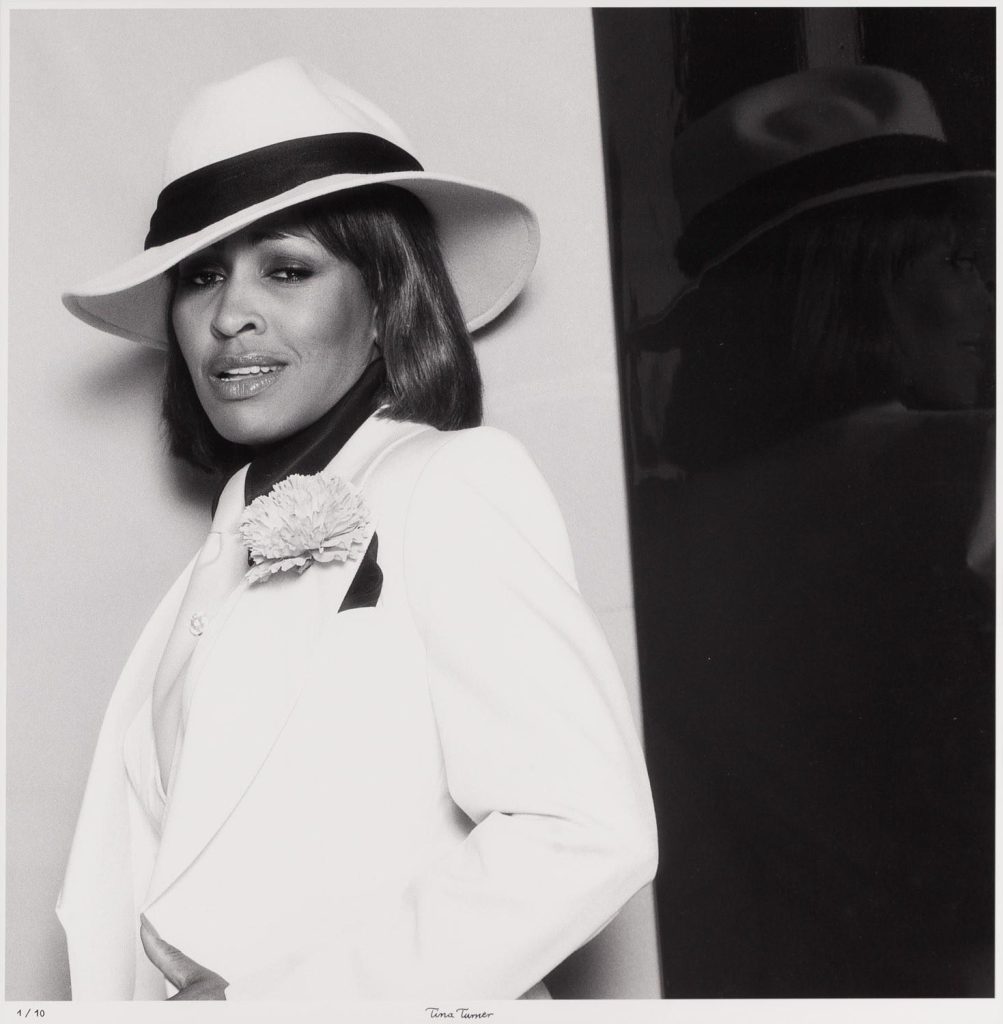
This is a particularly interesting aspect of the Persephone archetype.
Persephone’s transformation concerns her relationship with power. As Kore, she belongs to a world organized largely by others. As queen of the underworld, she possesses a position and authority of her own.
Tina’s story suggests a comparable psychological movement: from having her life defined by a powerful partner to making decisions according to her own needs and possibilities.
In 1984, Private Dancer brought her extraordinary international success.
She was in her mid-forties.
That fact matters because her comeback challenged more than the assumption that she could not succeed without Ike. It also challenged the idea that a woman’s greatest possibilities must belong to her youth.
Yet the most important moment in her story may still be the one that occurred eight years earlier, when success was uncertain and she decided to leave anyway.
The later applause confirmed her professional achievement.
The decision to walk away revealed something about her developing freedom.
And perhaps this is one of the most meaningful ways to recognize Persephone’s transformation: a woman begins to understand that her life cannot remain entirely subject to someone else’s authority.
J. K. Rowling: The Imagination That Survived the Collapse of a Life
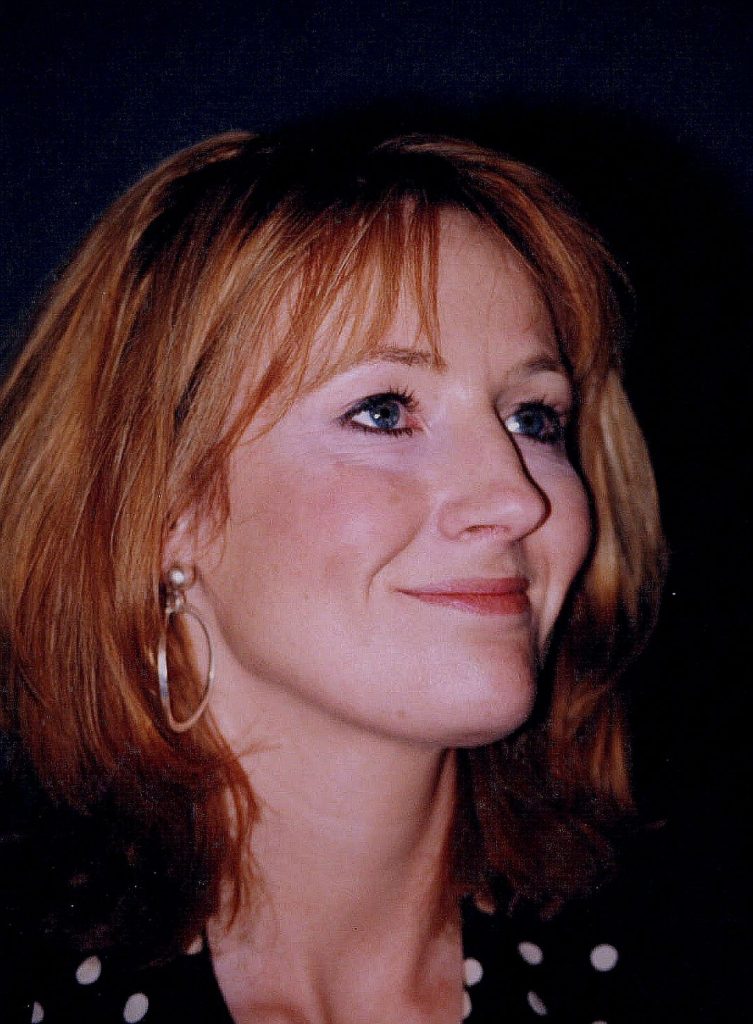 In 2008, J. K. Rowling stood before graduates at Harvard University and spoke about failure.
By then, she was one of the most successful authors in the world. The Harry Potter books had reached readers across generations and continents.
She could easily have delivered a familiar speech about believing in one’s dreams.
Instead, she described a period when her life had fallen apart.
Her mother had died in 1990 after living with multiple sclerosis. Rowling later spoke about how deeply this loss influenced her writing. The emotional center of the Harry Potter story—the longing for a mother who is gone, the fear of death, and the enduring significance of love—cannot be separated entirely from the author’s own experience of bereavement.
In the following years, Rowling married, became a mother, and experienced the breakdown of her marriage.
She returned to Britain with her young daughter, unemployed and struggling financially.
What makes her story fascinating is the relationship between these outward circumstances and the imaginative world she was creating.
She was writing about a boy who discovers that ordinary reality conceals another world.
That world contains extraordinary beauty and possibility, but also danger, grief, cruelty, and death.
Its central characters are repeatedly asked to confront experiences for which childhood offers no preparation.
It would be too simple to say that Rowling turned her own suffering directly into Harry Potter. Fiction is shaped by imagination, reading, observation, craft, and countless influences.
Still, the relationship between an author’s emotional life and the themes that preoccupy her can be worth exploring.
Rowling’s books repeatedly return to the question of what a person becomes after loss.
Harry cannot restore his parents to life. He must grow into someone capable of loving and acting in a world where their absence remains real.
There is a striking resonance here with Persephone.
Persephone’s return does not abolish the underworld. Her life becomes connected to it.
Likewise, maturity does not require us to erase grief. It may involve learning to carry knowledge of loss while continuing to live.
But Rowling’s story contains another important dimension.
In her Harvard address, she refused to describe poverty as a romantic or spiritually desirable experience. She spoke about its fear, stress, and humiliations.
This distinction matters.
We sometimes tell stories about successful people as though every hardship was secretly arranged to prepare them for greatness.
Such stories can become comforting myths of their own. They imply that suffering is worthwhile because it will eventually produce a reward.
Rowling’s reflections suggest a more complicated understanding.
Her difficult circumstances forced her to reconsider what she valued and what she was prepared to pursue. She continued writing despite having no guarantee that her manuscript would be published.
She did not know that the world would one day celebrate the story.
She knew only that writing remained important to her.
In 1997, Harry Potter and the Philosopher’s Stone was published.
The extraordinary success that followed changed her financial circumstances and public identity beyond recognition.
Yet consider the difference between the two transformations.
One was external: an unknown writer became internationally famous.
The other concerned the relationship between her sense of purpose and the judgments of the world.
During the years when she appeared unsuccessful by conventional standards, she continued doing work that mattered to her.
Persephone’s symbolic journey invites us to consider this quieter form of development.
What happens when the life we expected disappears?
Which parts of our identity depend on circumstances, approval, or status?
And what remains when those supports are no longer available?
For Rowling, one answer was the imaginative work she continued to create.
Her story reminds us that a woman’s return from a difficult period may begin long before anyone else recognizes that something important is happening.
Selena Gomez: The Woman Behind the Image
Selena Gomez presents a different version of the Persephone story because her descent did not happen outside public view.
In many ways, the public was watching all along.
She became famous as a child, grew into an international pop star, and spent much of her youth in an environment where millions of strangers felt entitled to discuss her body, relationships, career, and emotional life.
 For a young performer, this creates a peculiar situation.
An identity can become internationally recognizable before the person living inside it has finished discovering who she is.
The audience grows attached to a particular image. The industry builds expectations around it. The young woman herself continues changing, sometimes in directions that conflict with what everyone expects.
In Selena’s case, this tension became especially visible during the years surrounding her Revival tour.
In 2016, she interrupted the tour amid serious mental health difficulties. She was also living with lupus, an autoimmune disease that had already affected her health.
In 2017, complications from lupus led to a kidney transplant. Her friend Francia Raísa donated a kidney.
The procedure was a major medical event, but it did not resolve every difficulty Selena faced.
She continued dealing with emotional distress and later spoke publicly about receiving a diagnosis of bipolar disorder.
The most revealing account of these years may be her 2022 documentary, Selena Gomez: My Mind & Me.
The project originally began as something much closer to a conventional film about a successful performer.
Director Alek Keshishian started filming Selena during the period of her Revival tour. But as he witnessed her struggles, he became concerned that continuing to film might exploit someone in distress.
Production was interrupted.
When the documentary eventually took shape, its subject had changed.
Instead of offering another polished portrait of celebrity life, it explored the experiences of a woman trying to understand herself while living with serious health challenges and public expectations.
That change in the documentary’s direction is revealing in itself.
The familiar story of celebrity success could no longer contain the reality of the person being filmed.
Selena has spoken about how uncomfortable it was to watch some of the footage. She knew that releasing it meant allowing strangers to see moments she might otherwise have preferred to keep private.
Why would someone who had already experienced so much unwanted public attention choose to reveal even more?
Part of the answer lies in the difference between being exposed and choosing what to disclose.
For years, other people had interpreted Selena’s life for her.
In the documentary, she participated in telling a story that included experiences the glamorous public image had largely concealed.
This does not mean that every private experience should become public. Privacy can be a vital form of self-protection.
But in Selena’s case, the decision to speak openly about her mental health was connected to a desire to help others feel less isolated.
One particularly interesting detail concerns her relationship with social media.
In a 2022 interview with Vogue, she explained that she had stopped personally accessing her Instagram account years earlier.
For a celebrity whose public presence depended partly on digital platforms, that was a significant boundary.
Millions of people could still follow Selena Gomez online, but she had decided that she did not need to read everything those people said about her.
There is something psychologically important in that distinction.
A public image may belong partly to the public imagination. A woman’s inner life does not have to be surrendered along with it.
Selena also began directing more of her influence toward mental health advocacy.
She launched Rare Beauty in 2020, alongside the Rare Impact Fund, which supports mental health initiatives for young people.
At first glance, a cosmetics company might seem an unlikely vehicle for challenging harmful expectations about appearance.
Yet this tension is precisely what makes the project interesting.
Beauty is an industry that has often profited from insecurity. Selena’s brand has tried to connect cosmetics with individuality, self-acceptance, and emotional well-being.
That effort exists within a commercial business, and it can be examined critically like any other. But it also reflects an attempt to reshape the meaning of a field in which she has spent much of her life.
Her advocacy has continued to develop. At the fourth annual Rare Impact Fund Benefit in October 2026, the organization reported having raised more than $30 million toward its long-term fundraising goal.
There is no reason to imagine that these achievements have eliminated Selena’s health challenges.
Indeed, her story may be particularly relevant to Persephone because it does not fit the conventional narrative of suffering followed by permanent victory.
Persephone moves between worlds.
She does not become a stranger to darkness simply because she has returned to the light.
Selena’s experience invites us to think about maturity as the capacity to live with aspects of ourselves that cannot always be controlled, hidden, or transformed into an attractive public image.
She continues to create, work, build relationships, and support others while acknowledging that her life includes difficulties.
Perhaps the most interesting change is that she has become more willing to define herself in terms that do not depend entirely on the audience’s approval.
For a woman who grew up under the gaze of millions, that is no small development.
What Persephone Knows
Tina Turner, J. K. Rowling, and Selena Gomez belong to different generations, professions, and cultural worlds.
One had to escape a violent marriage and establish herself independently.
Another experienced bereavement, financial hardship, and the collapse of her expectations before finding extraordinary success as a writer.
The third has navigated chronic illness, psychological difficulties, and the pressure of growing up in public.
We cannot know the entirety of their inner lives, and it would be presumptuous to assign them permanent psychological identities based on selected episodes from their biographies.
Yet their stories allow us to examine three questions at the heart of Persephone’s myth.
What happens when the world we trusted can no longer protect us?
How do we begin to recognize our own authority when familiar identities fall away?
And can we return to ordinary life without denying what we have learned in its darker passages?
The answers differ from woman to woman.
For Tina, a decisive act of separation opened the possibility of a new life.
For Rowling, creative work remained meaningful when many external measures of success had disappeared.
For Selena, greater openness and more deliberate personal boundaries became part of her developing relationship with fame and herself.
None of these women needed to experience hardship in order to deserve respect, love, or freedom.
Their difficulties were real, and the choices available to them were shaped by circumstances that cannot be reduced to mythology.
The value of the Persephone archetype lies elsewhere.
It offers a way to recognize that a woman may move through several different identities over the course of her life. Some belong to youth and possibility. Others emerge through responsibility, loss, self-knowledge, and the discovery of limits.
The woman who returns may still love many of the things she loved before.
She may still sing, write, perform, create, and care for others.
But she may no longer be willing to live according to the same assumptions.
In the ancient story, Persephone becomes queen of the underworld.
For a modern woman, that symbolic queenship may appear in a much quieter form: the growing ability to make decisions with a fuller knowledge of herself and of life.
And perhaps that is why Persephone’s story has endured for so long.
It gives a name to the strange experience of returning to a familiar world and discovering that the person who has returned is no longer quite the same.